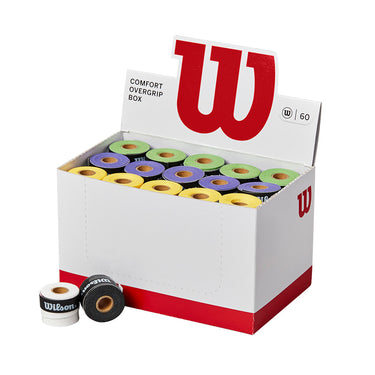
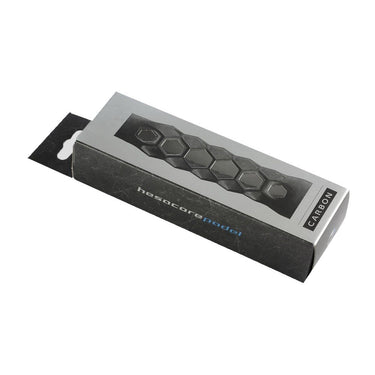
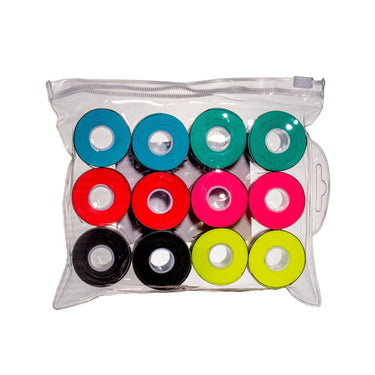
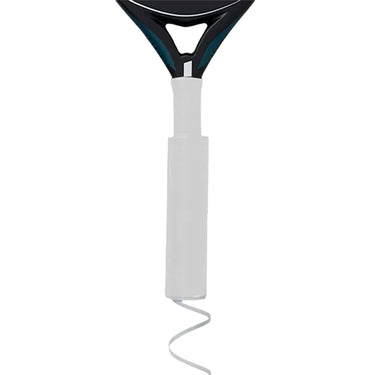
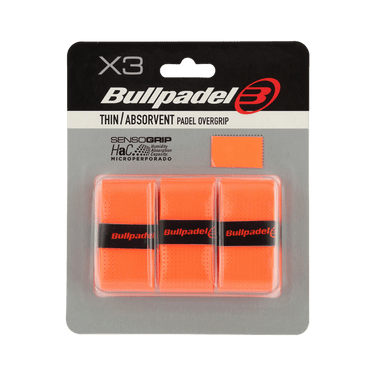
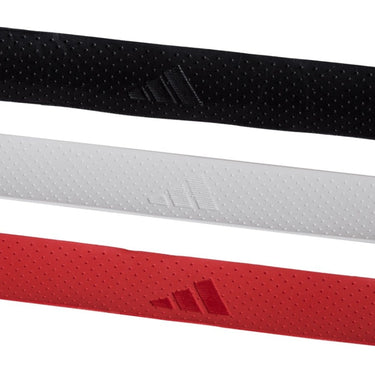
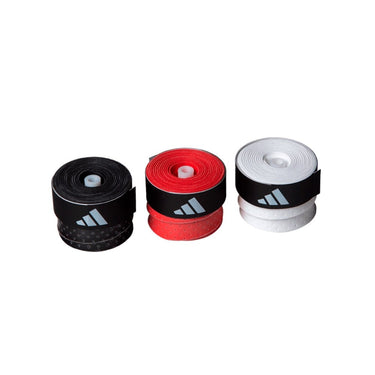
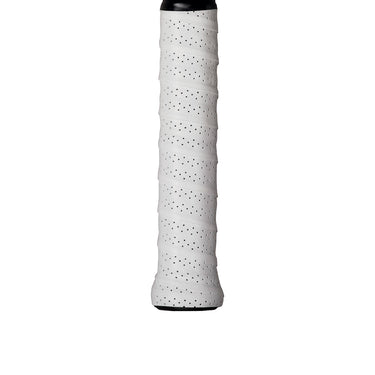
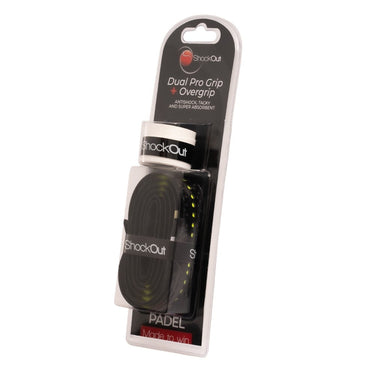
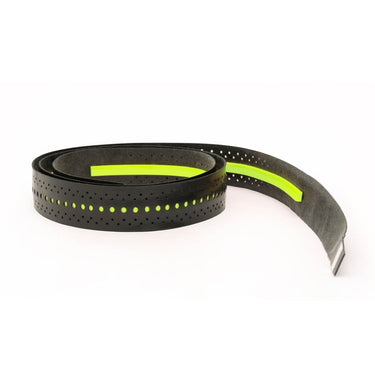
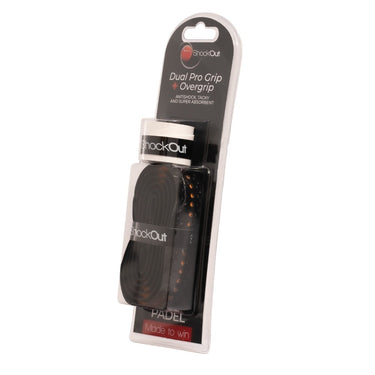
The overgrip is the thin tape wound over the original grip of the padel racket. It is the accessory that is replaced most often in all padel equipment, and probably offers the best value for money: it costs little and can hugely change the feel of play.
This collection brings together the overgrips in the catalogue, in different thicknesses, textures and finishes.
What an overgrip does
Improves the grip. It absorbs moisture from the hand and prevents the racket slipping on the smash, which is where you notice it most.
Protects the original grip. The wear affects the tape, not the factory-installed grip.
Adjusts the handle thickness. It is the cheapest way to correct a handle that feels too small without changing rackets.
How to choose yours
Absorbent or tacky
It’s the first decision and depends on how much you sweat. The most absorbent overgrips feel slightly spongy and wick away moisture; tacky overgrips stick more to the hand and give a firmer sense of hold, but they saturate sooner if you sweat a lot. In warm conditions, absorbent ones tend to be the better choice.
Thickness
A thin overgrip preserves the original feel of the handle and transmits vibration better; a thick one cushions more and increases the grip diameter. If you find yourself squeezing tightly to stop the racket moving, the handle is probably too small and a thicker overgrip will usually fix it.
Texture
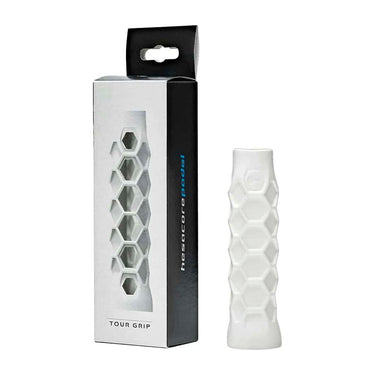
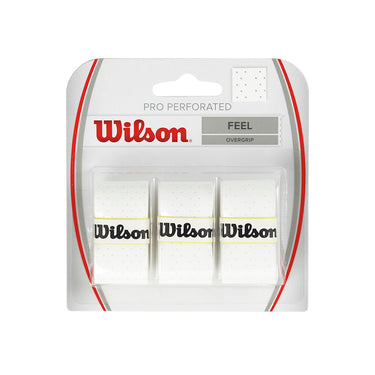
Smooth, perforated or embossed. This is the most personal part of the choice: perforated overgrips evacuate moisture better, while embossed ones give more anchor points for your fingers.
Brands and colours
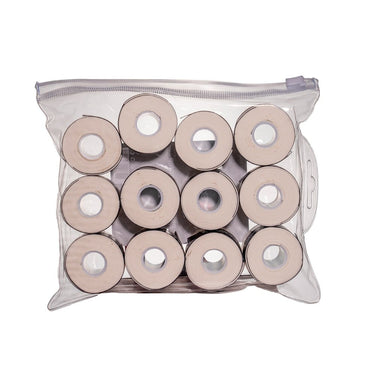
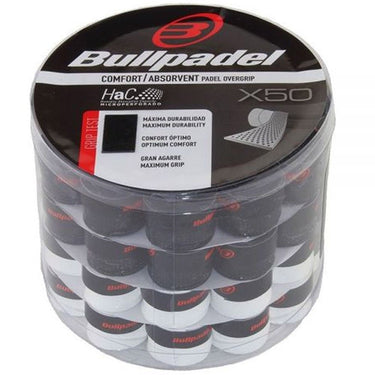
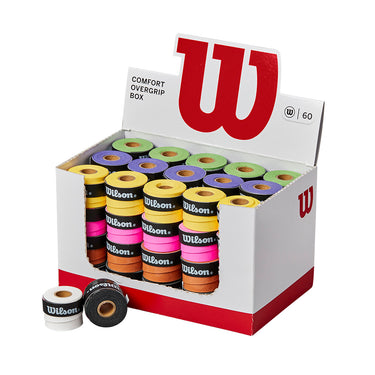
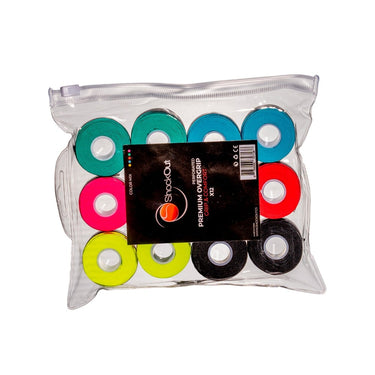
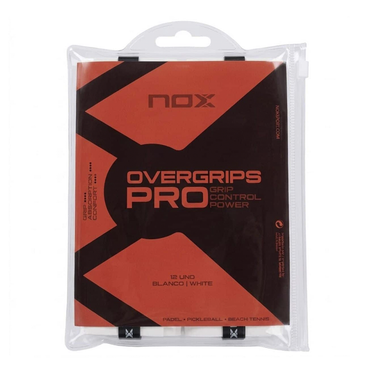
The brand filter in the accessories category includes manufacturers such as Adidas, Babolat, Bullpadel, Head, Nox and Wilson, and many overgrips are sold in various colours and multi-packs. If you play regularly, buying a pack is more cost-effective than single units, because it is a consumable that needs frequent replacement.
The most cost-effective item in your kit
For what it costs, no other product changes the on-court experience so much. A fresh overgrip keeps the handle steady, improves control on wrist shots and prevents the feeling that the racket is moving in your hand on the smash. A saturated overgrip does the opposite, and it happens gradually, so many players don’t notice until they fit a new one.
That’s why it matters: it is the point of contact between your hand and the material, and it is the only piece of equipment that degrades in weeks rather than seasons.
Tackiness and absorption: how they behave
The two families on the market suit different preferences and climates.
Absorbent. Slightly spongy feel, they draw moisture from the hand and spread it through the material. They are the option for heavy sweaters and for summer play.
Tacky. Stickier feel, they give an immediate sense of hold and great confidence on the shot. They perform well in dry climates or indoors, but saturate sooner if you sweat excessively.
There is a third option, mixed programmes, which aim for a middle ground. No family is objectively superior: the choice depends on your hand, the climate and how often you are prepared to change it.
Perforated, smooth and embossed
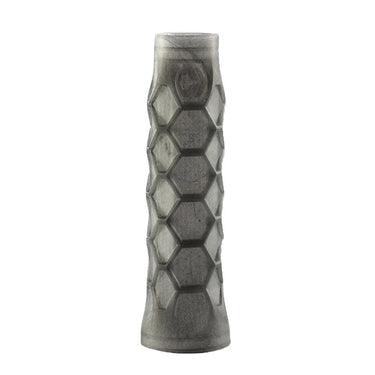
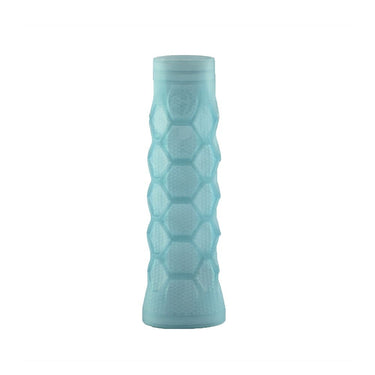
The overgrip surface also plays a large role. Perforated models have small holes that help evacuate sweat and stop moisture remaining in contact with the palm. Smooth ones offer a uniform feel and alter the original handle sensation least. Those with embossing or microtexture provide finger anchor points, which is useful for wrist play and spin shots.
This is the most personal aspect of the choice, and also the cheapest to test: a pack lets you compare several finishes without committing to one.
Thickness and grip size
A thin overgrip preserves the handle’s feel and transmits shot feedback better; a thick one cushions and increases the grip. That increase in diameter is not a side effect: it is the most economical way to correct a handle that is too small.
The practical reference is the usual one: when you close your hand around the handle there should be roughly the gap of one finger between your fingertips and the base of your thumb. If there is no gap, the handle is large; if there is too much space, it is small and you will end up squeezing too hard.
Overgrip, grip and arm discomfort
There is a direct relationship worth knowing. When the overgrip slips, the hand squeezes harder to keep hold of the racket, and that extra tension travels to the forearm and elbow. It is one of the factors that contributes to epicondylitis issues among recreational players.
Changing the overgrip in time is not a medical measure nor does it prevent injuries by itself, but it does remove an avoidable cause of overexertion. And it costs less than almost any other equipment decision.
Overgrips by brand
Almost every padel brand has its own line, with distinctive designs and colours. In the accessories filter you will find, among others, Bullpadel overgrips, Head overgrips, Wilson overgrips and models from Adidas, Babolat and Nox. Differences between manufacturers lie more in feel, thickness and durability than in technology.
If you play regularly, it pays to buy multi-packs rather than single units: it is a consumable, and having spares in your bag avoids playing a whole match with a slippery handle.
Which is the best overgrip
There is no single answer, and be wary of anyone who gives one without asking how much you sweat and where you play. What can be advised is how to get it right: if you sweat a lot, prioritise absorption and perforation; if you want an immediate tacky feel and play in dry conditions, choose a tacky overgrip; and if the handle is too small, opt for a thicker one. With those three pieces of information, the selection reduces to a few comparable options.
How to fit it, step by step
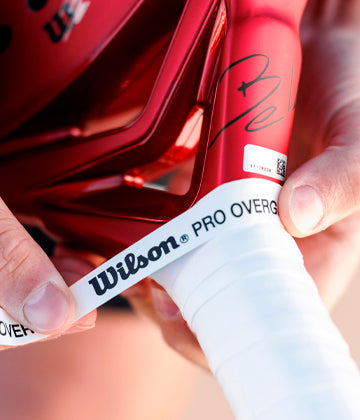
Remove the old one and clean the handle. Start at the base, with the adhesive side inwards, and wind upwards overlapping each turn by about a third of the tape width. Keep a constant tension without overstretching: if you pull too hard it breaks earlier and becomes uneven. When you reach the top, cut on the diagonal and secure with the adhesive tape from the packet.
When to change it
There is no universal figure, because it depends on how much you sweat, the climate and how many hours you play. The reliable signal is tactile: when you feel your hand slipping or the handle becoming slick, it is time to change it. And if the overgrip has become hard and shiny, it is saturated even if it looks intact.
Where to continue
For other accessories, the entry point is padel accessories. If what you want is to stop sweat before it reaches the handle, the complementary collection is wristbands.
Frequently asked questions about overgrips
What is the difference between grip and overgrip?
The grip is the original factory-installed handle, thicker and fixed in place. The overgrip is a thin tape wrapped over it and changed frequently. You can play without an overgrip, but then wear goes straight to the original grip.
Can you put an overgrip over another?
You can, and it is a way to increase the handle thickness, but it is not ideal: the lower, already saturated layer will still retain moisture and the combined result loses firmness. It is better to remove the used one before fitting the new one.
How many overgrips do I need per year?
It depends on your playing hours and how much you sweat. Someone who plays twice a week typically changes it every few weeks, and more often in summer. That is why most players buy packs.
Is the same overgrip suitable for a tennis racket?
Yes, it is the same product. The difference is the handle length: a tennis racket has a longer grip, so you may have less tape left over when you finish.
Which direction do you wrap it?
From the base of the handle upwards, overlapping each turn slightly over the previous one and keeping tension without overstretching. If you overstretch it, it breaks sooner and becomes uneven.







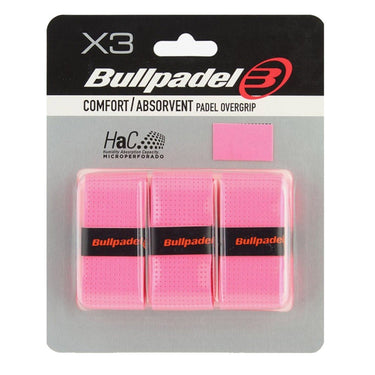
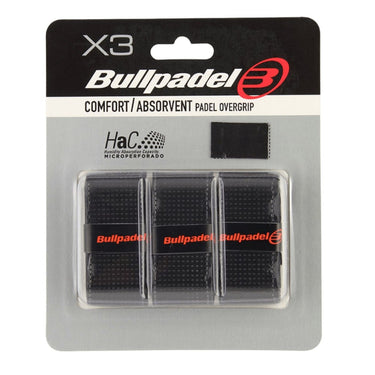
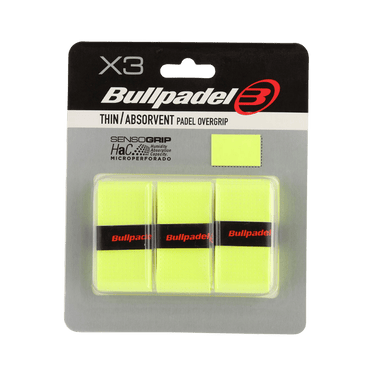
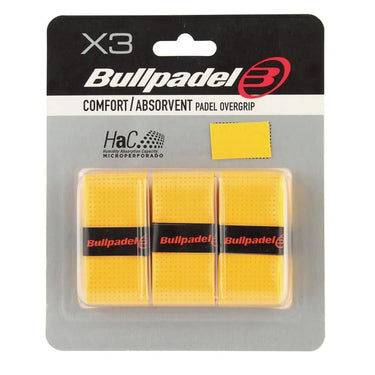 bullpadel gb-1201 perforated padel overgrips pack of 3YellowBlackPink
 bullpadel gb-1200 overgrip 3-packYellowWhiteOrange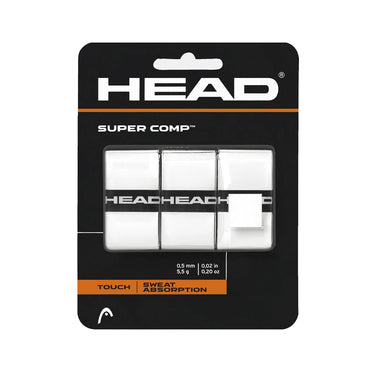





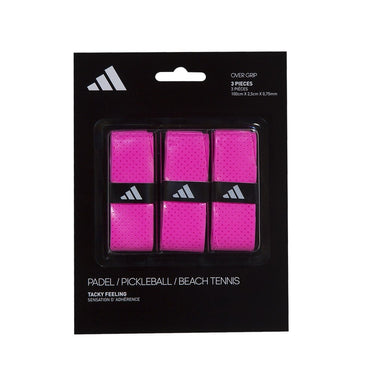
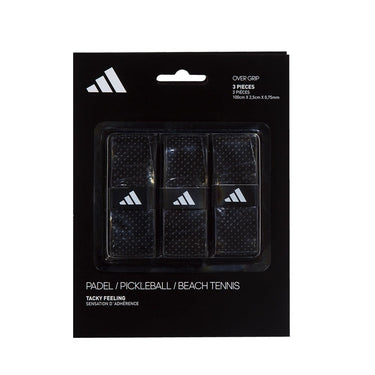
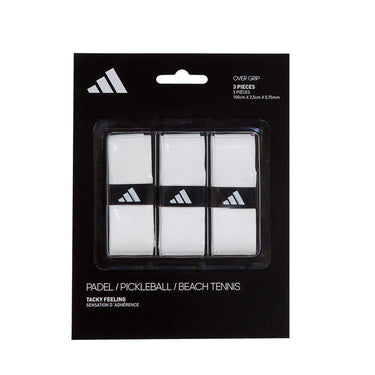
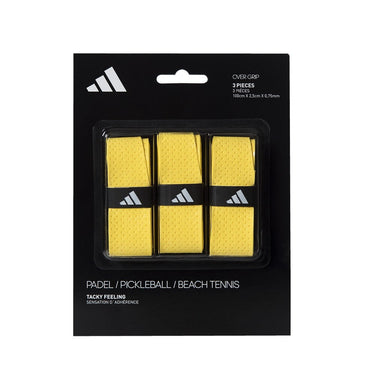 adidas overgrip set 3 units 2024YellowWhiteOrangeBlackPink
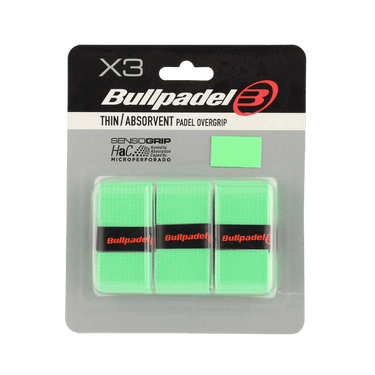 bullpadel gb-1705 overgrip 3-packOrangeGreenYellow

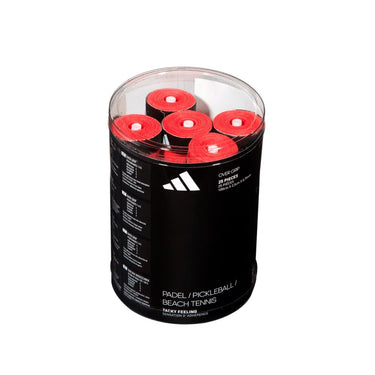
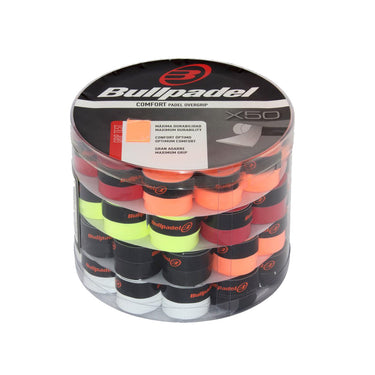
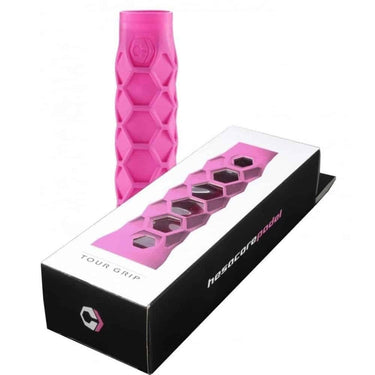
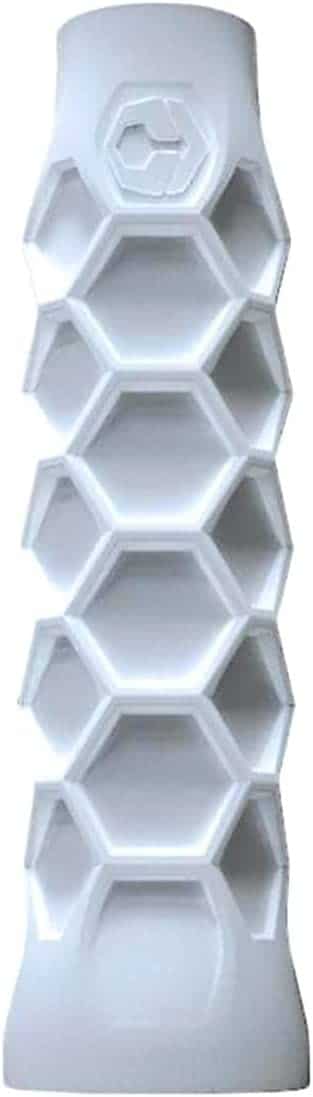
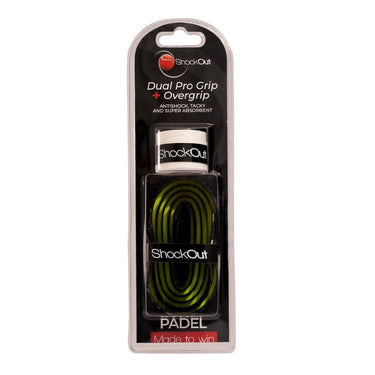 shockout dual grip and overgrip black 2-packYellowOrange
 shockout dual grip and overgrip whiteYellowOrange