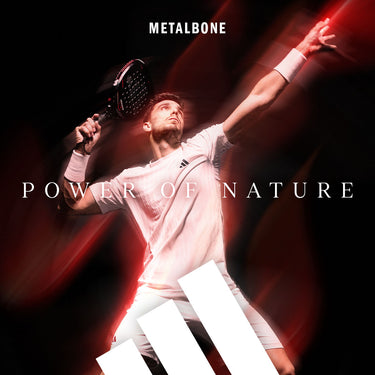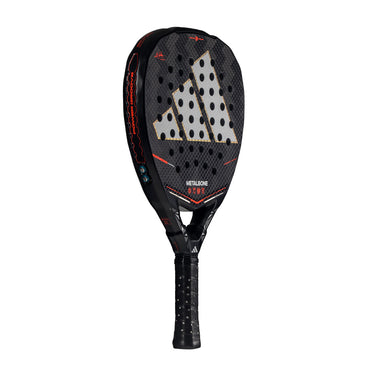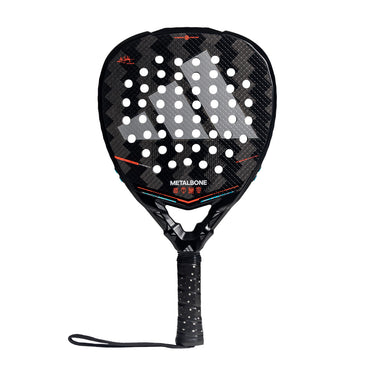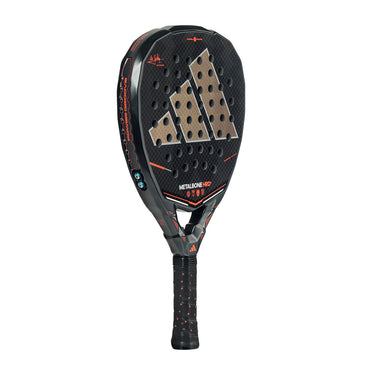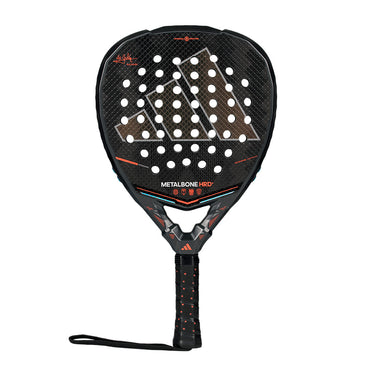




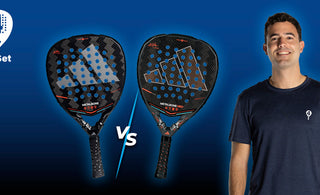
The adidas Metalbone 2026 and Metalbone HRD+ 2026 are once again Ale Galán’s two rackets and two of the most popular options among players looking for power.
At first glance, they look almost identical. They share the same mold, carbon fiber, weight system, rough surface, and a very similar design. However, after testing both, I can confirm that the difference between them is much more noticeable than it may seem.
The key is the foam.
The standard Metalbone uses a soft and highly reactive foam, while the HRD+ features adidas’ hardest core. That single change affects ball output, control, sweet spot size, and the way each racket generates power.
What Do the Two Metalbone Rackets Have in Common?
Both rackets have a diamond shape, a high balance, and the same frame technologies, including the octagonal structure and Power Groove, while the Carbon Aluminized 16K face improves durability, power, and overall quality. They also feature adidas’ Weight & Balance System, which allows you to add up to 11.2 grams through removable screws positioned around the racket’s throat.
Without the additional weights, adidas places both rackets in an approximate range of 345 to 360 grams. This means a Metalbone can be relatively light on the scale, even though it doesn’t always feel that way on court.
The reason is the weight distribution. In the units I tested, the balance ranged from approximately 26.8 to 27.2
centimeters, depending on where I placed the screws. Therefore, even when choosing a lighter unit, we’re still talking about a racket with a considerable amount of weight concentrated toward the top.
This helps generate leverage and power, but it also makes the racket more physically demanding, especially in defense, bandejas, and víboras.
The Main Difference: Soft Performance vs High Memory
The standard Metalbone 2026 uses Soft Performance EVA, a low-density foam designed to provide greater comfort and ball output.
The Metalbone HRD+ 2026 uses High Memory EVA, a higher-density foam designed to perform better when the ball is hit at high speed.
Although adidas describes High Memory as its hard foam, I wouldn’t consider the HRD+ one of the hardest or driest rackets on the market. To me, it has a medium hard touch while remaining highly reactive.
The standard Metalbone feels noticeably softer. The ball sinks deeper into the foam and comes off the racket very easily.
The difference isn’t simply that one is comfortable and the other is difficult to use. Both generate power relatively easily, but they do it in different ways.
Metalbone 2026: Easy Power and High Ball Output
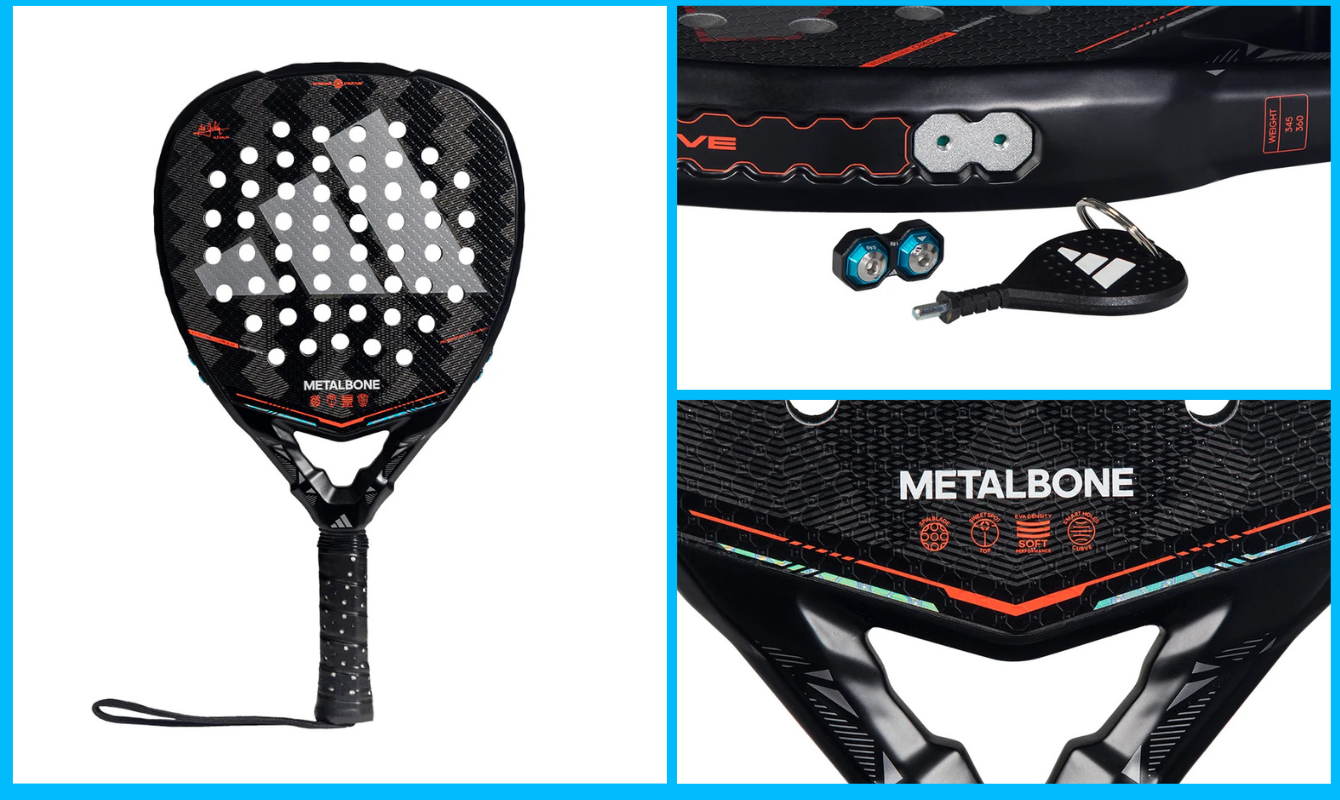
The standard Metalbone is an extremely reactive racket. You don’t need to accelerate at full speed to make the ball come off quickly. The foam compresses easily and returns a lot of energy, which is especially helpful when hitting with medium acceleration.
This makes the Metalbone a racket with a lot of accessible power. The problem appears when you don’t want to accelerate.
In defense, blocks, or controlled volleys, its ball output can make the ball rise or travel farther than expected. Its high balance also makes it more difficult to reach low balls quickly or play comfortably when you’re under pressure.
It isn’t an uncontrollable racket, but it requires an adjustment period. You need to learn when to use a shorter motion and avoid accelerating automatically on every shot.
I would also be careful when using it in very hot conditions. As the temperature rises, the foam becomes even softer and the response may become excessively lively.
What I Like Most About the Metalbone
-
It generates speed with very little effort.
-
Its power is easy to access.
-
It feels more comfortable than the HRD+.
-
You can customize its weight and balance.
Its Main Limitations
-
Its ball output can be difficult to control.
-
The high balance makes it physically demanding.
-
The sweet spot isn’t particularly large.
-
The foam may become too soft in hot conditions.
Metalbone HRD+ 2026: More Control and Better Performance at High Speed
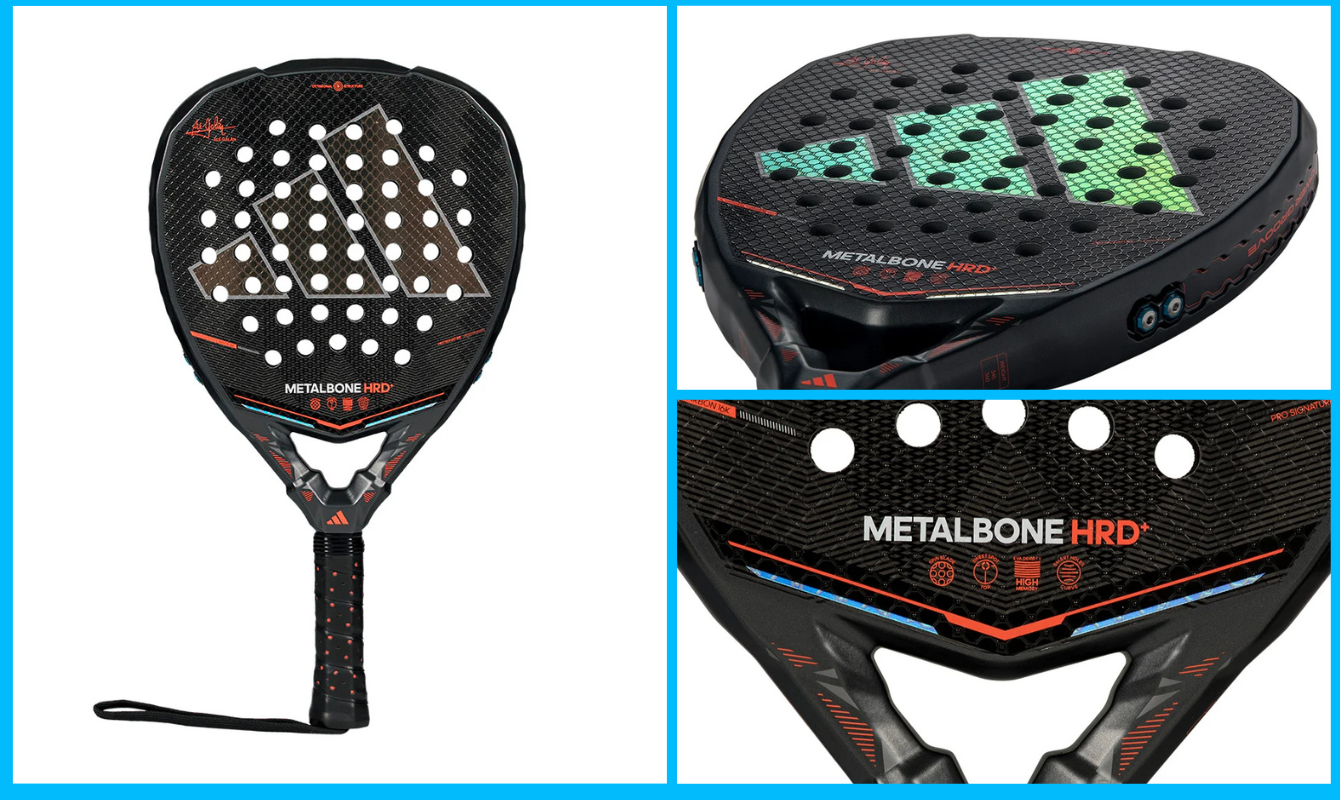
The Metalbone HRD+ has a firmer and more direct response. The High Memory foam deforms less, so the ball spends less time inside the racket. This allows me to control depth more effectively on volleys, bandejas, and blocks.
That doesn’t mean it has no rebound. In fact, it’s still highly reactive compared with other hard rackets. However, its response is more predictable than the standard Metalbone’s.
I still wouldn’t consider it an especially comfortable racket in defense. The high balance is noticeable, the sweet spot is slightly smaller, and you need to reach the ball in a good position.
Even so, I personally felt more comfortable with the HRD+ because its lower ball output allowed me to control the ball more effectively.
The biggest difference appears on smashes.
When you accelerate slowly or hit without especially refined technique, the standard Metalbone may give you more help. But when you accelerate properly, the HRD+ performs better: it remains stable, transfers energy more precisely, and allows you to reach greater ball speed.
In fact, I consider it one of the rackets that makes it easiest to generate serious power, provided you have the technical and physical level required.
What I Like Most About the Metalbone HRD+
-
It provides more control than the standard Metalbone.
-
It performs better on high-speed shots.
-
It’s extremely powerful on smashes.
-
It remains reactive despite its firmer foam.
Its Main Limitations
-
It’s physically demanding.
-
The sweet spot is slightly smaller.
-
It isn’t particularly easy to use in defense.
-
It still has more rebound than other hard, dry-feeling rackets.
Which One Is More Powerful?
It depends on what you mean by power.
The standard Metalbone generates power more easily when your acceleration is moderate. Its soft foam helps the ball come off quickly without forcing you to do all the work.
The Metalbone HRD+ performs better when you accelerate at high speed. On a smash executed with good technique and fast racket-head speed, it can generate more power than the standard version.
So I wouldn’t simply say that the HRD+ is powerful and the Metalbone isn’t. Both are powerful:
Metalbone: easy, reactive power.
Metalbone HRD+: high-speed power and greater stability.
How Does Ale Galán Configure the Weights?
Ale Galán has tested several different configurations with the Weight & Balance System.
In the setup he was using when I prepared this comparison, he placed the heaviest screws at the top of the racket and didn’t add the remaining weights.
This allows him to raise the balance as much as possible and increase the leverage effect. adidas can supply his rackets at the exact weight he wants, so he doesn’t need to use every screw to make the racket heavier.
That doesn’t mean his configuration is right for an amateur player.
Placing additional weight at the top increases potential power, but it also makes the racket slower and more demanding on the shoulder and forearm.
Metalbone or Metalbone HRD+: Which One Should You Buy?
I’d choose the adidas Metalbone 2026 if you want:
-
Power with less effort.
-
A medium-soft touch.
-
High ball output.
-
An offensive racket with slightly more comfort.
I’d choose the adidas Metalbone HRD+ 2026 if you want:
-
Greater control.
-
A firmer response.
-
Better performance when accelerating.
-
Maximum power on smashes executed with good technique.
Personally, I prefer the Metalbone HRD+. I like its firmer response, and I feel I can control the ball more effectively without sacrificing attacking performance.
However, the standard Metalbone may work better for a player who wants to generate speed more easily and doesn’t enjoy rackets with a firm touch.
Both remain physical, offensive, high-balance rackets. Your decision shouldn’t depend only on which one is “more powerful,” but on how you personally generate that power.
You can find both models at Padel Market and use the code 4SET on products included in the promotion.