



Choosing between control padel rackets and power padel rackets is one of the most important decisions you will make as a padel player. The wrong racket can hold back your progress, overload your arm and cost you points you should be winning. In this guide we explain the real differences between the two types, the models that best represent each profile, a simple test to help you decide and the most common questions.
Control vs power padel rackets: the differences that matter
It is not just about hitting harder or with more finesse: each type reflects a playing philosophy that affects the shape, balance, core, materials and technologies of the racket. Understanding these features will give you confidence in your choice and improve your performance on court.
Control rackets are built for precision, feel and consistency. They usually have a round shape, a low balance (towards the handle) and a soft core that absorbs impact. The result is more manoeuvrability, less fatigue and a lower risk of elbow strain.
Power rackets are designed for attack. They have a diamond or teardrop shape, a medium-high balance (weight concentrated in the head) and stiffer cores or faces that generate more ball output. Their sweet spot sits higher, which favours smashes, but they demand more technique.
| Feature | Control rackets | Power rackets |
|---|---|---|
| Shape | Round | Diamond or teardrop |
| Balance | Low (towards the handle) | Medium-high (towards the head) |
| Core | Soft (soft EVA) | Firmer (high-density EVA) |
| Sweet spot | Large and central | Smaller and higher |
| Ball output | Controlled and precise | High and explosive |
| Player profile | Technical, back-court game | Attacking, net game |
| Recommended level | Beginner to advanced | Intermediate to advanced |
Advantages of power padel rackets
They are not just for professionals: any player with solid technique and an attacking profile can benefit from them.
- More ball output: shots gain speed and depth, and it is easier to finish points with a smash.
- More spin in attack: head-heavy balance and rough surfaces help you add spin to bandejas, víboras and smashes.
- Control of the net: a high balance makes attacking volleys easier when your technique allows it.
- Tactical pressure: a powerful smash forces your opponents to adapt.
- Less effort required: head-heavy weight adds momentum, so the ball comes off quickly without forcing your arm as much, as long as you hit the sweet spot.
Standout power rackets
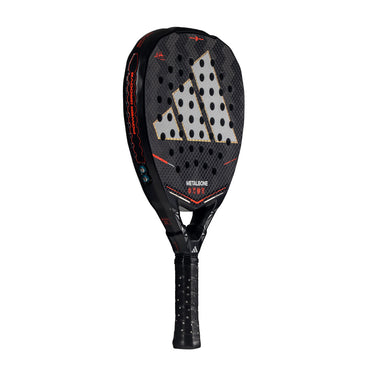
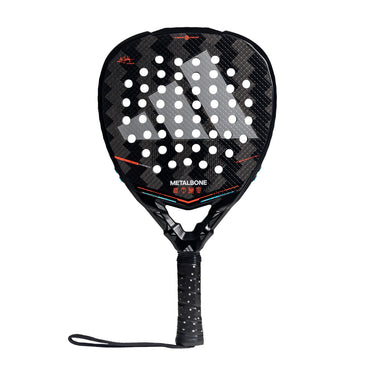
- Adidas Metalbone 2026 Ale Galán: diamond shape, high balance, 16K aluminised carbon faces and an EVA Soft Performance core. Explosive power with a touch of comfort.
- Adidas Metalbone HRD+ 2026 Ale Galán: the hardest version of the Metalbone line, with an EVA High Memory core. Only for highly refined technique.
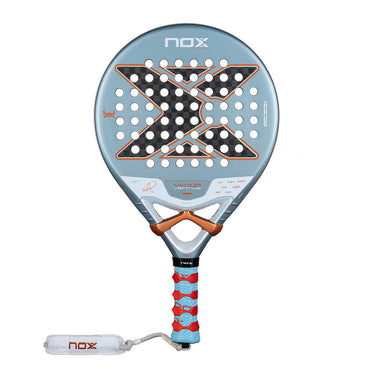
- Nox AT10 Genius Attack 12K 2026 by Agustín Tapia: diamond shape, high balance, 12K aluminised carbon faces and a dry, firm feel.
- Head Extreme Pro: diamond shape, high balance, Power Foam core and carbon and fibreglass faces with a rough surface.
- Babolat Viper 3.0 2026 Juan Lebrón: teardrop shape, 3K carbon and a firm feel for an aggressive game with a little more control.
- Bullpadel K2 Power 2025: diamond shape and high balance with a SoftEVA core and fibreglass faces. An entry point to power for intermediate players.
Advantages of control padel rackets
They are the ideal starting point for most players and the choice of many experienced players who value consistency.
- Large sweet spot: more margin for error on every shot.
- More comfort: the soft core absorbs vibration and protects your elbow, wrist and shoulder.
- Better feel: you can sense where the ball strikes and adjust direction easily.
- Consistency: players who control the ball win points from their opponents' errors.
- Manoeuvrability: a low balance lets you react quickly, especially in defence.
Standout control rackets
- Bullpadel Discover Control 2025: round, light, fibreglass faces and a SoftEva core. For amateur and occasional players.
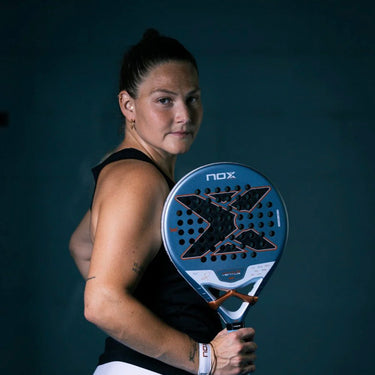
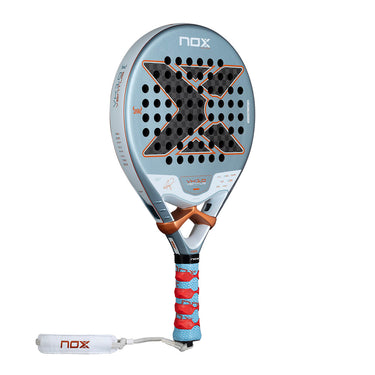
- Nox ML10 Ventus Control 3K 2026 by Miguel Lamperti: round, low-medium balance, soft rubber core and 3K carbon faces.
- Nox VK10 Ventus Control 12K 2026 by Aranzazu Osoro: round, medium balance and 12K carbon faces for control with good ball output.
- Babolat Counter Vertuo 2.6 2026: round, low balance and Soft Fiber faces. Designed for defending and counter-attacking.
- Adidas Metalbone Ctrl 2026: the control version of the Metalbone family, with a round shape and 16K aluminised carbon for high-level players.
- Adidas Cross It Light 2026 Marta Ortega: round shape, medium balance and a light weight for a fast, precise game.
How to decide: a simple test
Answer these five questions honestly:
- Do you win more points from your opponents' errors than from winners?
- Do you spend more time at the back of the court than at the net?
- Have you had pain in your elbow, wrist or shoulder?
- Do you play fewer than two or three times a week?
- Do you still miss off-centre shots often?
If you answer "yes" to three or more, a control racket will help you more. If you answer "no" to most of them and your game is built on attacking, you can consider a power racket. If you are somewhere in between, an all-round racket is probably your best option.
Key factors when choosing
- Playing level: if you are a beginner or intermediate player, start with control. Power needs technique to be used well.
- Physical condition and injuries: any discomfort in your elbow, wrist or shoulder is a clear sign to choose control and a soft core.
- How often you play: if you play occasionally, control will give you more satisfaction; with three or more sessions a week you can consider power.
- Construction: carbon fibre adds stiffness, durability and a more direct response; fibreglass adds feel and comfort; soft EVA foam absorbs vibration. The combination of faces and core defines the racket's character.
- Grip and handling: a manoeuvrable racket gets you to the ball sooner; adjust the handle thickness with overgrips so you do not lose precision.
- Experience and preferences: if you come from tennis or another racket sport, you may handle a power racket sooner; if this is your first contact with padel, control will give you more confidence.
Control or power for your playing position
Your position also matters. The backhand-side player (left side for a right-hander) usually takes more smashes and finishing shots, so many choose power or all-round rackets with a medium-high balance. The forehand-side player usually builds the point, sustains rallies and looks for precision in lobs and straight shots, so a control or all-round racket fits better. It is not a fixed rule: if you play on the backhand side but your technique is not yet solid, control will still win you more points.
Player profiles: which one are you?
- Technical back-court player: consistent and patient. The ideal racket is a round control racket with low balance and a soft core.
- Net attacker: a natural smasher. Needs power, a diamond shape and high balance, as long as the technique is there.
- All-round player: plays in every area of the court. A teardrop or hybrid racket with medium balance works best.
- New player: a control racket is always the starting point.
- Experienced player with niggles: control and a soft core protect the arm without spoiling the fun.
What about all-round rackets?
All-round or hybrid rackets sit between control and power: a teardrop or hybrid shape and medium balance, so you can play precisely from the back and attack decisively at the net. They are especially interesting if you are moving between levels or have not yet defined your style. You can explore them in our padel rackets collection.
Frequently asked questions about control and power rackets
What is the best control padel racket?
It depends on your level. For beginners, a round, light racket such as the Bullpadel Discover Control 2025; for intermediate-advanced players, models such as the Nox ML10 Ventus Control 3K 2026 or the Nox VK10 Ventus Control 12K 2026 combine control with good ball output.
What is the best power padel racket?
For advanced players, the Adidas Metalbone 2026 Ale Galán and the Nox AT10 Genius Attack 12K 2026 are benchmarks this season. If you want maximum stiffness, the Metalbone HRD+ 2026, but only with highly refined technique.
Which racket is best for beginners?
Without doubt, a control racket. Its large sweet spot forgives imperfect shots and protects your arm while you develop technique. Power will come with time.
How do I know if my racket is a control or a power racket?
Look at the shape, balance and feel. If it is round and tips towards the handle when you balance it on a finger (low balance), it is a control racket. If it has a diamond or teardrop shape and the weight is in the head, it is a power racket. Control rackets give a softer strike; power rackets make a drier sound and produce faster ball output.
Can I move straight from a control racket to a power racket?
You can, but it is better to do it gradually, moving first to a teardrop racket with medium balance. That way your arm and technique adapt to the extra weight in the head and the smaller sweet spot.
To go further, read our guide on how to choose a padel racket for your level. And if you have any questions, get in touch: our team will help you find the racket that suits your game.