




Short answer: yes, you can play padel with 2 people. It is not the format the sport was designed around, and you will not see it on the professional tour, but singles padel is perfectly playable, genuinely fun and an excellent workout.
Padel is primarily designed as a doubles sport: the court, scoring and tactics all assume four players. But if your partner drops out, a one on one padel match is a fine substitute.
Is padel played in pairs?
Yes. Every official competition is a doubles match, and official FIP padel is recognised as a doubles-only sport.
That is why the rules make no formal provision for singles: the International Padel Federation writes its regulations for doubles padel, and the same is true of the Lawn Tennis Association, which governs the sport in Britain. Singles padel exists as an informal format.
Can you play singles padel on a full court?
You can, and most people do play singles padel this way, but it is hard work. A standard doubles court measures 20 x 10 metres, a large area for one person to cover. Expect longer rallies and a lot of running.
With so much ground to defend, a full padel court rewards good footwork over power. Winning points outright is hard when your opponent has the whole court to aim at.
Dedicated singles courts and court dimensions
Some clubs have dedicated singles courts. This smaller court measures 20 x 6 metres, keeping the length but cutting the width so two players can cover it.
These are still rare in the UK, so most padel players use standard doubles courts for singles matches. If your club has one, the singles game is faster and less exhausting.
The same scoring system as doubles
Scoring in padel remains the same whether played in singles or doubles: points run 15, 30, 40 and game, sets are won with six games and a two-game margin, and a match is usually three sets.
Serving alternates each game. The serve must be underarm, and the ball must bounce diagonally into the opponent's service box.
Which rules apply with just two people?
The formal rules apply unchanged: glass walls, double bounce and underarm serve all work the same way. What changes is what you agree beforehand.
Playing singles on a doubles court requires rule modifications. Players typically agree to play within designated diagonal halves: if the ball lands outside the opponent half it is out. That keeps rallies competitive instead of turning the match into a sprint.
Agree which half each of you defends before the first point. There is no official standard, so whatever you both prefer is correct.
Tactics: cross court rallies and shot selection
Singles rewards patience. Cross court rallies are your friend: the cross is the longest line and gives the most margin. Fewer angles can be played effectively because of the open space, so hit deep and wait for something short.
High lobs are a crucial tactical strategy: a good lob pushes your opponent to the back glass and buys you the net. Shot selection matters more than power, so move them around and stay focused. Quick reflexes help at the net, but points are won from the back.
Is singles good training?
Playing singles can improve skills for doubles matches. Covering the entire court alone boosts stamina, stability and court awareness, and improves footwork and reflexes. It allows more ball touches, so you can practise shot accuracy. It is a great workout, combining cardio and power.
What it does not teach is positioning as a team. Treat singles as a supplement, not a replacement.
Padel singles versus a tennis court
A padel tennis court is smaller than a tennis court, yet the glass and mesh walls are in play and keep the ball alive far longer, so rallies carry on.
The underarm serve also removes the biggest weapon a tennis singles player has. The main difference is that you win by outlasting and outmanoeuvring your opponent rather than serving big.
Three ways to make the singles game work
First, use the diagonal-half rule. It is the simplest fix and makes the game far more playable on a standard court.
Second, play shorter sets: first to four games, or one set with a tie-break. Third, use it as a drill: cross court only, or every point must include a wall.
Can three people play padel?
Yes. Usually one player against two, with the solo player the strongest of the three, or you rotate one person out each game.
Frequently asked questions
Can you play padel with 2 people? Yes. You can play padel with just two players. On a standard 20 x 10 m court it is demanding, so most agree to play diagonal halves.
Are there official singles leagues? No. Competitions at every level are played in pairs, though some clubs run informal singles leagues.
Is there a special singles court? Yes, singles padel is played on a 20m by 6m court, though these remain uncommon in the UK.
Does the scoring change? No. Singles uses the same scoring system as doubles: 15, 30, 40, game, and sets to six games with a two-game margin.
Is singles padel good for beginners? Great for fitness and footwork, but new players learn more from doubles, where positioning and partner work are central.
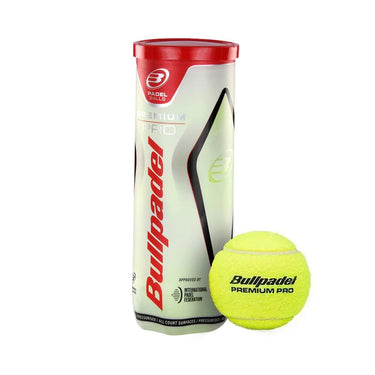
Can you use a tennis ball? No. A tennis ball bounces too high off the glass walls. Use proper padel balls.
Final thoughts
You can absolutely play padel with just two people, and it beats not playing. It is a fun, demanding variation on a sport meant for four.
Agree your halves and format before the first point, keep sets short, and use singles to sharpen movement and fitness. To kit up, explore our padel rackets and padel balls ranges.