



Padel balls look almost identical to tennis balls, and that resemblance causes more confusion than any other piece of padel kit. They are not the same, and playing with the wrong ball changes how the game feels from the very first rally.
This guide explains what makes a padel ball different, how to choose between the options, how long they last and which brands are worth your money in the UK. Browse the full range in our padel balls collection as you read.
Are padel balls the same as tennis balls?
No. A padel ball and a tennis ball share the same rubber core and felt covering, and to the eye they look the same, but two specifications differ: size and internal pressure.
A padel ball is slightly smaller and, more importantly, holds less pressure inside. That lower pressure means a lower bounce and a slower ball through the air, which is exactly what the padel court needs. On an enclosed court with glass walls, a livelier tennis ball would fly off the back glass and make rallies almost impossible to control.
Official padel ball specifications
The International Padel Federation (FIP) sets the standard that approved balls must meet. A regulation padel ball has a diameter of between 6.35 cm and 6.77 cm, weighs between 56.0 g and 59.4 g, and must bounce between 135 cm and 145 cm when dropped from a height of 2.54 m onto a hard surface.
It must also be white or yellow, pressurised and felt-covered. Every official padel ball in our range meets this standard.
Why padel balls come in pressurised tubes
Padel balls are pressurised, which means they contain gas at a higher pressure than the surrounding air. That pressure is what gives the ball its bounce, and it is why balls are sold in sealed, pressurised tubes of three.
The moment you open the tube the ball begins to lose pressure, whether you play with it or not, which is why a half-used tube left in your bag for a month feels dead.
Pressurised or pressureless padel balls?
Padel balls are categorised into pressurised and pressureless varieties, and the differences between them decide how long a tube lasts and how the ball feels.
Pressurised balls are designed with lower internal pressure than a tennis ball, typically between 4.6 and 5.2 kg per square inch. They offer a lively bounce and speed, with a lively response off the racket, and pressurised match balls are used in official tournaments and recreational matches alike. The trade-off is longevity: they lose pressure through natural air leakage over time and become flat after two to four matches.
Pressureless balls rely on a thick rubber core structure for bounce instead of internal gas, so pressureless padel balls maintain their bounce over time and last three to five times longer than pressurised alternatives. They feel slightly heavier and less lively, which makes them excellent for training, ball machines and coaching, and choosing durable balls ensures better value for frequent play.
How long do padel balls last?
It depends entirely on how you play. For a social club player, a tube of three balls will maintain top performance for roughly two to three sessions. Once the felt starts to fluff up and the bounce drops, the ball slows down and stops responding off the glass.
Competitive players change them far more often. If you play doubles in a league, or your smashes are not carrying, it is time for a fresh tube.
Fast balls or slow balls: choosing the right ball
Padel balls are broadly split into two characters. Fast balls, often labelled Pro, have slightly higher pressure and a harder feel. They travel quicker, suit advanced players and hold up well to heavy hitting, but they punish poor timing.
Slower balls have less pressure and a softer feel, giving you more time to get into position. Beginners enjoy the game more with them, because more balls stay in play.
Temperature matters too: balls fly faster in warm weather and feel slower on a cold British winter evening. Match the ball to your playing style and the conditions.
Matching padel balls to the conditions
Standard pressure balls are suitable for humid conditions, whilst high-pressure balls are designed for faster courts and dry climates. High-altitude balls have a lower rebound specified range to compensate for thin air, which matters if you play abroad in the mountains.
Conditions also affect wear. Padel balls last longer in dry conditions than wet, and hard courts can wear down padel balls more quickly than the sand-filled artificial grass used on most British courts. Felt composition affects the grip and control of the ball, which is why two balls with identical specifications can still feel different.
The best padel balls: brands to know
Most of the padel world plays with a handful of brands, and all of them are represented in our range.
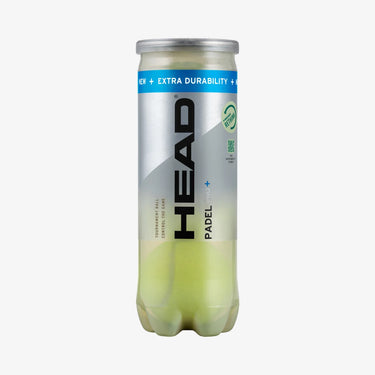
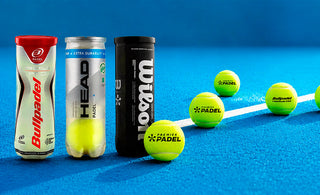
Head is the most widely used name in UK clubs. The Head Padel Pro+ and Pro S+ are the workhorse choices for regular players, whilst the Head Padel One is a friendlier, slightly softer option. All sit at around £5.50 a tube.
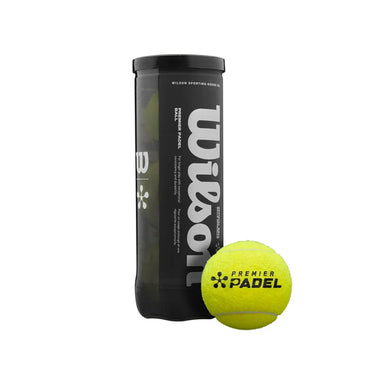
Wilson Premier is a dependable all-round ball with a consistent bounce, at about £5.95. Bullpadel supplies the FIP Next and Premium Pro, both around £5.50, and as an official federation ball the FIP Next is a good gauge of what competition play feels like.
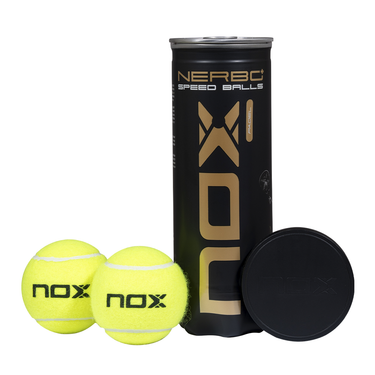
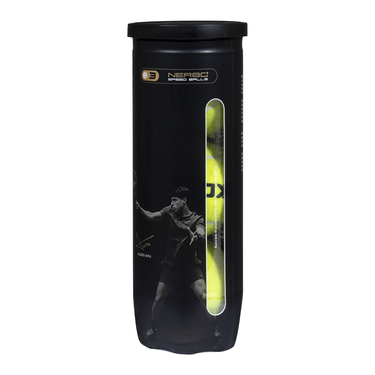
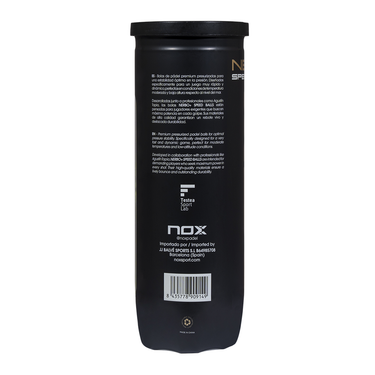
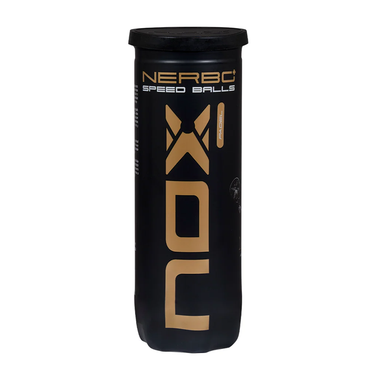
Nox Nerbo, StarVie and Black Crown round out the range from roughly £4.95, and are sensible choices for practice and social play where you get through a lot of balls.
How much do padel balls cost in the UK?
Expect to pay between £4.95 and £5.95 for a tube of three padel balls. Buying single tubes is fine if you play occasionally, but the cost adds up quickly once you are on court twice a week.
If you play regularly, or buy for a club, a box of 24 tubes brings the price per ball down substantially, and the quality holds as long as tubes stay sealed and cool.
Storing padel balls to maintain top performance
Keep unopened tubes somewhere cool and out of direct sunlight. The worst place is the boot of a car in summer, where heat accelerates pressure loss even through a sealed tube.
Once opened there is no way to restore lost pressure, though a pressurised ball saver device slows the decline if you play infrequently.
Padel ball colour and visibility
Almost everything you will see is the familiar fluorescent yellow, which gives excellent visibility against blue and green court surfaces and under floodlights.
Which padel balls should a beginner buy?
Start with a slower, softer ball rather than a Pro model: longer rallies, more time to read the bounce off the glass, more fun. The Head Padel One, StarVie and Black Crown tubes are sensible first buys under £5.50.
Save the faster Pro balls for when your technique is consistent and you want the added pace and durability, then adapt your choice as your control improves.
How many padel balls do you need for a match?
Amateur players usually need three balls available in a match, which is exactly why tubes are sold in threes. Professional players change padel balls after nine games to keep speed and bounce consistent throughout a match.
Expert opinions: why consistency beats brand
Ask any coach and the same insights come up: consistency matters more than brand loyalty. A ball that is built to a reliable standard and delivers the same bounce tube after tube will do more for your game than chasing whichever model is fastest.
Expert opinions differ on which ball is best, so try two or three to discover what suits you. Once you find one that works for your playing style, stick with it.
Frequently asked questions
Are padel balls the same as tennis balls? No. Padel balls are slightly smaller and have lower internal pressure, which gives a lower bounce and a slower ball. Tennis balls feel too lively on an enclosed padel court.
How much do padel balls cost in the UK? Between £4.95 and £5.95 for a tube of three. Boxes of 24 tubes cut the cost per ball considerably for regular players and clubs.
What are the best padel balls? Head Padel Pro+ and Pro S+ are the most widely used in UK clubs, with Wilson Premier and Bullpadel FIP Next close behind. Choose a slower ball if you are still learning.
Final thoughts
Padel balls are the cheapest part of your kit and the one that changes most between sessions. Buy proper padel balls, choose a slower ball whilst learning, change them once the bounce drops, and buy a box if you play weekly.
Explore every brand and price in our padel balls collection, and pair them with the right frame from our padel rackets range.