



Choosing the right padel racket is one of the decisions that most affects your progress. The short answer: the best racket for you depends on your playing level, your playing style and your experience. There is no universal racket, and using one designed for a different level can hurt your technique and increase the risk of injury.
In this guide we explain how to choose a padel racket (and how to choose yours without being swayed only by brand or design) step by step: which shape, balance, weight and materials suit your level, which mistakes to avoid and which models we recommend for each profile.
Summary table: which racket to choose for your level
| Level | Recommended shape | Balance | Racket type |
|---|---|---|---|
| Beginner | Round | Low (towards the handle) | Control |
| Intermediate | Teardrop or hybrid | Medium | All-round |
| Advanced | Diamond or teardrop | Medium-high or high | Power or all-round |
Why it matters to choose a racket for your level
Many players choose on looks or pick the racket their favourite professional uses. But every racket is designed for a specific profile. An attacking racket in the hands of a beginner is hard to control, transmits more vibration and can cause elbow or shoulder pain. Conversely, an advanced player with a control racket may miss ball output. The right racket strengthens what you do well and minimises your limitations.
Five variables decide whether a racket suits you: shape, balance, weight, core and face materials. Add one detail many guides forget: grip size.
Key factors when choosing a padel racket
Racket shape
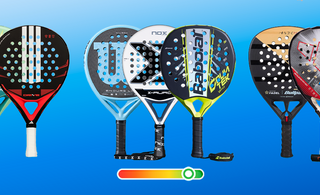
Of all the racket shapes, the choice between round, teardrop or diamond is the one that most changes how a racket plays. A round racket has a large, central sweet spot: excellent control, a forgiving feel and more margin for error. The racket shape is the first filter. A teardrop racket places it slightly higher and balances control and power. A diamond racket moves it to the top for maximum power on smashes, but its smaller sweet spot demands better technique.
| Shape | Sweet spot | Typical balance | Recommended level | Style |
|---|---|---|---|---|
| Round | Very large | Low | Beginner | Control |
| Teardrop | Large-medium | Medium | Intermediate | Versatile |
| Hybrid | Medium | Medium-high | Intermediate-advanced | All-round |
| Diamond | Small | High | Advanced | Attack |
Balance
Balance tells you where the racket's centre of gravity sits. With a low balance the weight is close to the handle: more manoeuvrability and less load on the arm. With a high balance the weight moves towards the head: more momentum and power, but also more physical and technical demands.
Weight
Most rackets weigh between 340 and 380 grams. As a guide, beginners are better off with a light or medium-weight racket (roughly 340–365 g), which lets you react quickly and reduces tension in the arm. Advanced players usually handle heavier rackets, which add stability and power. Remember that weight and balance are felt together: a light racket with a high balance can feel heavier than a slightly heavier one with a low balance.
Core and face materials
Soft EVA foam cores absorb vibration and add comfort; hard or high-density EVA gives faster, more direct ball output; foam-type cores are softer and more elastic. On the faces, fibreglass gives a soft, comfortable feel, while carbon fibre (3K, 12K, 16K or aluminised) adds stiffness and energy transfer. The stiffer the racket, the more technique it demands.
Grip size
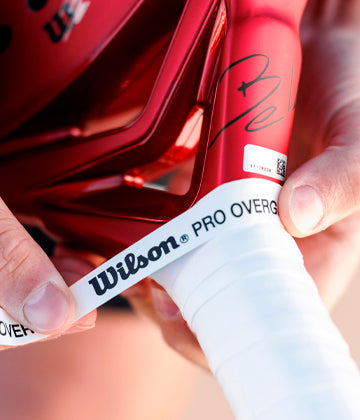
Most rackets have a standard handle thickness, and fine-tuning is done with overgrips. If you have small hands, use one; if your hands are larger or you notice you squeeze too hard, add a second. A handle that is too thin or too thick makes you grip harder and increases the risk of forearm pain.
Budget
Rackets are grouped into entry-level, mid-range and high-end, and value for money varies a lot between brands. If you are starting out or play occasionally, an entry-level or mid-range racket gives you everything you need. High-end rackets make sense when you play often and your technique lets you make the most of stiffer materials and advanced technologies. Spending more will not make you a better player if the racket does not suit your level.
Which racket to choose as a beginner
For beginners, comfort and confidence come first. What matters is not power but consistency: a racket that forgives mistakes and does not overload your arm.
- Round shape with a large sweet spot.
- Low or low-medium balance for better manoeuvrability.
- Soft core that absorbs vibration.
- Fibreglass faces and a smooth or slightly rough surface, with good shock absorption.
What to avoid: diamond shapes, very high balance and very stiff carbon faces.
Recommended rackets for beginners
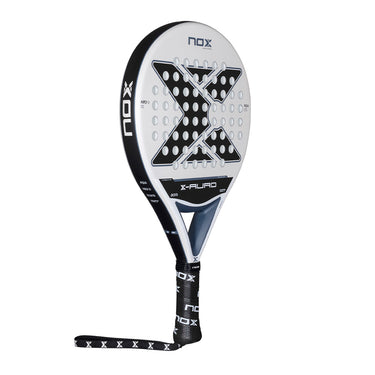
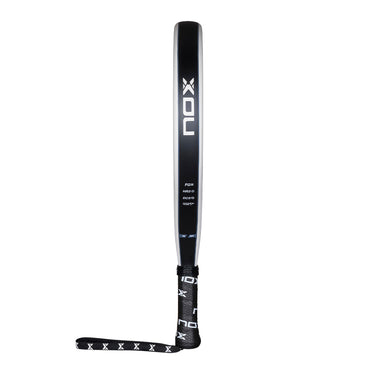
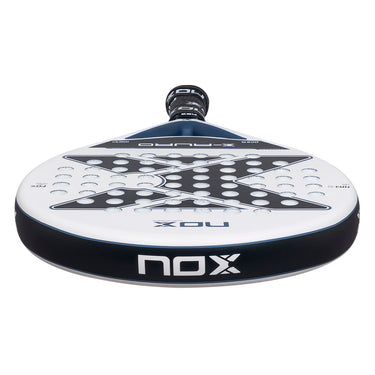
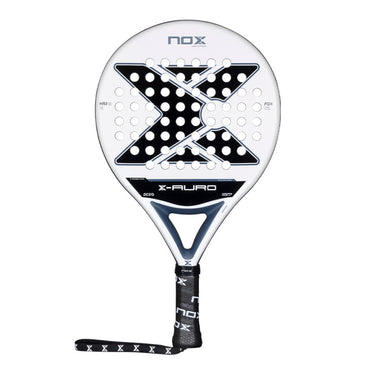
- Nox X-Auro 2026: round, low balance, fibreglass faces. Control and a large sweet spot.
- Adidas Drive Black 2026: round, low balance and a low-density EVA core to absorb vibration.
- Bullpadel Discover Control 2025: light, round and very easy to handle for amateur players.
Which racket to choose as an intermediate player
You can already control the basic shots, you are starting to add spin and you want a little more power without losing consistency. Your style is taking shape, so the choice becomes more personal.
- Teardrop or hybrid shape: a balance of power and control.
- Medium balance: more powerful shots without losing manoeuvrability.
- Medium-density core and faces with some stiffness.
- Textured surface to generate spin; rough surfaces help with slice and topspin.
What to avoid: very stiff diamond rackets if your technique is not yet consistent, and rackets so light that they reduce depth.
Recommended rackets for intermediate players
- Adidas Metalbone Superlight 2026: the light version of the Metalbone family, for quick movement and changes of pace.
- Bullpadel K2 Power 2025: diamond shape and high balance, but with a SoftEVA core and fibreglass faces that make it more accessible.
- Babolat Counter Vertuo 2.6 2026: round with a low balance, for intermediate players with a defensive, counter-attacking game.
- Nox Nextgen Pro Hybrid 3K 2025: teardrop shape and an all-round profile for combining defence and attack.
Which racket to choose as an advanced player
With refined technique, good fitness and a defined style, the racket becomes a precision tool. Many advanced players even fine-tune weight or balance to sharpen performance.
- Diamond or teardrop shape depending on whether you prioritise attack or versatility.
- Medium-high or high balance for more impact.
- Carbon faces (3K, 12K, 16K or aluminised) for stiffness and energy transfer.
- Hard EVA or high-density core for fast ball output.
Recommended rackets for advanced players
- Adidas Metalbone Pro-EDT 2026 Ale Galán: diamond shape, high balance, aluminised carbon faces and a rough surface.
- Nox AT10 Genius Attack 12K 2026 by Agustín Tapia: diamond shape, high balance and 12K aluminised carbon for an attacking game.
- Head Coello Pro 2026 Arturo Coello: the most powerful model in Arturo Coello's collection.
- Starvie Raptor+ 2026: teardrop shape for advanced players who want power, control and manoeuvrability.
- Babolat Viper 3.0 2026 Juan Lebrón: teardrop, 3K carbon and a firm feel for an aggressive game.
How your playing style affects your choice
Two players at the same level may need different rackets. Control players and defensive players prioritise placement, consistency and longer rallies: a round or teardrop racket, low-medium balance and a soft core. Attacking players look for smashes, net play and winners with power rackets: diamond or teardrop, high balance and carbon faces. All-round players combine defence and attack: teardrop or hybrid with medium balance. To go deeper, read our guide to control vs power padel rackets.
Common mistakes when choosing a padel racket
- Choosing a professional's racket without their technical level.
- Putting price or design ahead of the right features for your level.
- Not considering weight and balance together.
- Buying an attacking racket when your game is mainly defensive.
- Ignoring previous elbow or wrist pain.
Our recommendation by player profile
| Profile | Shape | Balance | Recommended rackets |
|---|---|---|---|
| Beginner | Round | Low | Nox X-Auro 2026 / Adidas Drive Black 2026 / Bullpadel Discover Control 2025 |
| Intermediate (control) | Round or teardrop | Low-medium | Babolat Counter Vertuo 2.6 2026 |
| Intermediate (versatile) | Teardrop or hybrid | Medium | Nox Nextgen Pro Hybrid 3K 2025 / Adidas Metalbone Superlight 2026 |
| Intermediate (attack) | Diamond | High | Bullpadel K2 Power 2025 |
| Advanced (versatile) | Teardrop | Medium-high | Starvie Raptor+ 2026 / Babolat Viper 3.0 2026 |
| Advanced (attack) | Diamond | High | Adidas Metalbone Pro-EDT 2026 / Nox AT10 Genius Attack 12K 2026 / Head Coello Pro 2026 |
Frequently asked questions about choosing a padel racket
Which padel racket should I choose as a beginner?
A round racket with a low balance and a soft core. It gives you control, margin for error and less vibration. Avoid diamond rackets until your technique is consistent.
What is the best racket for an intermediate player?
Usually a teardrop or hybrid racket with a medium balance, which lets you combine defence and attack.
How much should a padel racket weigh?
Most weigh between 340 and 380 grams. Beginners and intermediate players are better with a light or medium-weight racket; heavier rackets add stability and power for players with the technique and fitness to use them.
Is a round or teardrop racket better?
It depends on your level and style. A round racket is better for starting out thanks to its control and large sweet spot; a teardrop racket is more versatile for intermediate players who want to combine control and power.
Do I need to try a racket before buying it?
It helps, but it is not essential. If you can, try friends' rackets with different shapes and balances to see what feels comfortable. If not, follow the right shape, balance and weight for your level: it is the most reliable way to get it right.
When should I change my racket?
When your level has clearly improved, when the racket shows wear in the core or faces, or when your style has moved towards a different profile. With regular use and good care, a racket usually lasts one to two years, depending on how often you play.
Should I use the same racket as a professional player?
It is not recommended unless your technical level is very high. Professional rackets are designed for refined technique and excellent fitness.
Conclusion
If you are a beginner, prioritise control with a round racket and a low balance. If you are an intermediate player, look for versatility with a teardrop or hybrid racket and a medium balance. If you are advanced, decide whether your game is more attacking or versatile and choose accordingly. You can see every model in our padel rackets collection and, if you have any questions, get in touch: we will help you find yours.