



If you’re searching for the best padel rackets 2026, this guide is designed to cut through the noise and help you make a genuinely informed decision. Whether you’re picking up the sport for the first time or upgrading your kit for the new season, the right padel racket makes a real difference to how you play and how quickly you improve. Below you’ll find a curated selection of standout models, a quick comparison table and the key buying criteria worth checking before you spend your money.
The best padel racket in 2026 won’t necessarily be the most expensive one, or the one your club’s strongest player uses. It will be the racket that best matches your level, your playing style and what you actually want from your game. That’s the thinking behind this guide: helping you compare options properly so you choose something that performs for you now and supports your development throughout the season.
How We Put This Guide Together
We focused on the factors that genuinely shape your experience on court: racket shape, balance, weight, face materials, core type, recommended level and playing style. Each model’s characteristics have been checked against its technical specifications in our catalogue, and the guide follows the questions players most often ask before buying: the best padel rackets of 2026, rackets by level, best value padel rackets, 2025 models still worth buying and common pre-purchase doubts.
Rather than just listing products, we’ve tried to answer the most important question: which padel racket actually suits the way you play?
The Best Padel Rackets 2026 at a Glance
The standout padel rackets of 2026 fine-tune the balance between power and control, refine their face materials and are increasingly built around specific player profiles. In short, it’s easier than ever to find a racket designed around how you play, whether that’s finishing points at the net, defending from the back of the court or doing both.
Here’s a quick overview of the top models this season:
| Model | Level | Shape | Key strength | Best for |
|---|---|---|---|---|
| Adidas Metalbone 2026 | Advanced | Diamond | Power with a touch more comfort | Aggressive players who want pace and punch |
| Nox AT10 Genius 12K Alum Xtreme 2026 | Advanced | Teardrop | Versatility and ball exit | High-level players who don’t want an extreme racket |
| Bullpadel Hack 04 Dale Candela LTD 2026 | Advanced | Diamond | Attack and stability | Offensive players with solid technique |
| Head Coello Pro 2026 | Advanced | Diamond | Power | Attacking players with established technique who like a firm feel |
| Adidas Metalbone HRD+ 2026 | Advanced | Diamond | Maximum stiffness and punch | Players who put power ahead of comfort |
| Babolat Technical Viper 3.0 2026 | Advanced | Diamond | Attacking precision | Players who prioritise attacking shots and finishing power |
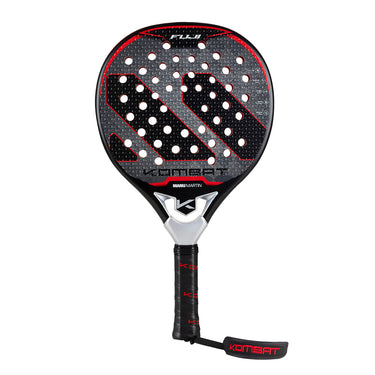
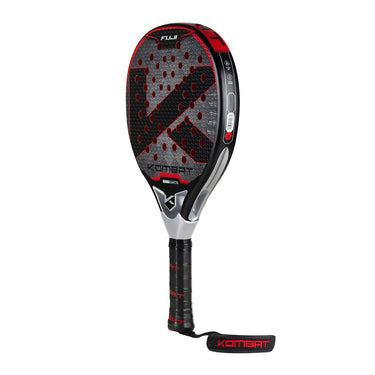
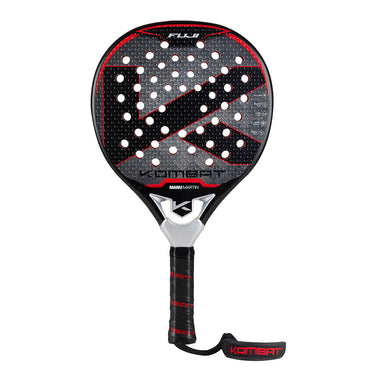
| Kombat Fuji 2026 | Advanced | Teardrop | All-round balance | Players who want competitive performance in a versatile racket |
In-Depth Reviews: Best Padel Rackets 2026
Adidas Metalbone 2026

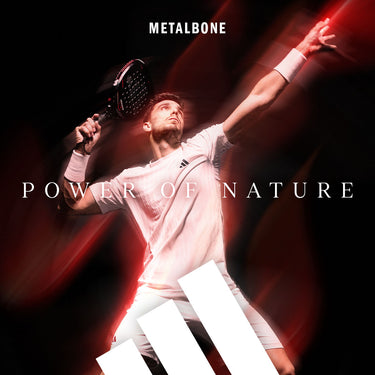
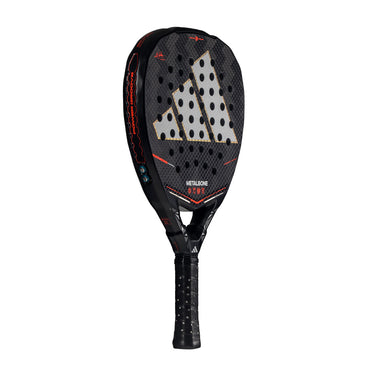
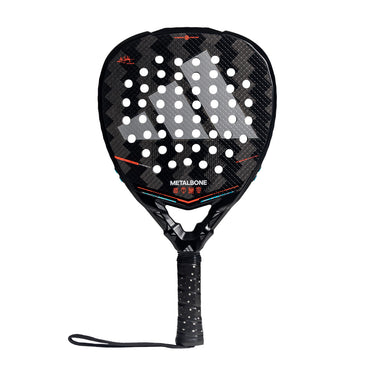
The Adidas Metalbone 2026, Ale Galán’s racket, remains one of the clearest benchmarks for attacking players. It combines a diamond shape, a high balance and 16K aluminised carbon faces with an EVA Soft Performance core, which adds a little more comfort than the stiffest versions in the family. Its Weight & Balance system also lets you fine-tune weight and balance with removable weights.
Where it really excels is sheer force on smashes, viboras and high balls. When you have the timing and arm speed to match, it responds with enormous personality. In return, it asks more of you in defence and in control situations.
Best for: advanced players who want a clearly offensive racket without giving up comfort entirely.
Nox AT10 Genius 12K Alum Xtreme 2026

The Nox AT10 Genius 12K Alum Xtreme 2026, from Agustín Tapia’s range, is one of the most complete rackets of the season. Its teardrop shape and medium-high balance, paired with 12K aluminised carbon faces, deliver ball exit, firmness and control without feeling as extreme as the most smash-focused models.
It’s a serious option for high-level players who want reliable performance both in defence and in attack. The AT10 family also includes variants with different priorities: the Nox AT10 Genius 18K Alum 2026 keeps the teardrop shape with 18K carbon faces, while the Attack version moves to a diamond shape and a more offensive profile. Availability of each variant may change during the season.
Best for: advanced players who want a high-performance racket with real balance between control and power.
Bullpadel Hack 04 Dale Candela LTD 2026

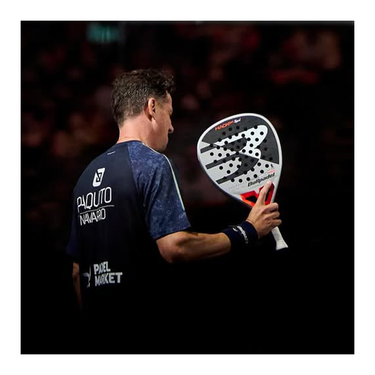
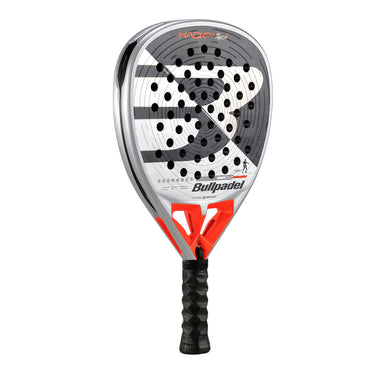
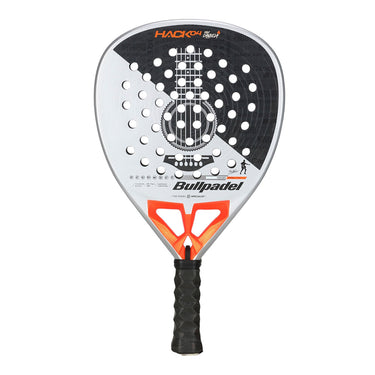
The Bullpadel Hack 04 Dale Candela LTD 2026 is a limited edition of Paquito Navarro’s racket. It shares the foundations of the Hack 04 2026: a diamond shape, a high balance, 18K carbon faces and a firm feel built for attacking play.
It’s aimed at players who want a competition feel, stability on impact and the ability to accelerate the ball with intent. It isn’t the most comfortable option for everyone, but it’s one of the most direct for players who want an aggressive response.
Best for: advanced players who want a stable attacking racket with a competitive edge.
Head Coello Pro 2026

The Head Coello Pro 2026 is the most powerful model in Arturo Coello’s collection. It combines a diamond shape, a Power Foam core and hybrid carbon faces, with a firm feel that rewards fast, well-executed shots.
Its natural territory is the smash and closing out points. Because of its stiffness and attacking focus, it suits advanced players who already generate their own pace and want a direct, precise response.
Best for: advanced, attacking players who prioritise power and precision.
Other Recommended Padel Rackets for 2026
Beyond the headline models, several other rackets round out a strong season. The Adidas Metalbone HRD+ 2026 is the stiffest version of the Metalbone family: diamond shape, high balance and an EVA High Memory core for players who put punch ahead of comfort. The Babolat Technical Viper 3.0 2026 brings a diamond shape, a high balance and a rough surface designed for attacking play, while the Babolat Viper 3.0 2026, Juan Lebrón’s racket, keeps a clearly aggressive identity. Meanwhile, the Kombat Fuji 2026, developed with Manu Martín, offers a teardrop shape, a medium balance and 18K aluminised carbon faces for versatile, all-round play.
How to Choose a Padel Racket in 2026
Picking the right padel racket comes down to four core factors: shape, balance, weight and materials. Get these right for your game and you’ll notice the difference every time you step on court.
Shape
Shape influences the sweet spot and the power–control trade-off. A round padel racket centres the sweet spot and suits players who want comfort and precision. A teardrop padel racket offers a balance that works well for versatile players. A diamond padel racket moves weight towards the head and shifts performance towards attack, provided you have the technique to unlock it.
Balance
A low balance favours manoeuvrability and control. A medium balance offers a more neutral feel. A high balance helps generate power but is more physically demanding and less forgiving if your technique isn’t there yet.
Weight
Weight affects both stability and fatigue. Most adult padel rackets weigh roughly between 340 and 375 grams. Too light, and some players lose punch; too heavy, and reaction time suffers and the arm tires sooner. If you’re torn between two weights, the more manageable one is usually the safer choice.
Materials and core
Fibreglass gives a more flexible, forgiving feel; carbon adds stiffness, responsiveness and durability. Figures such as 3K, 12K or 18K describe the carbon weave on the faces: they change stiffness and feel, but a higher number doesn’t automatically mean a better racket. The core, usually EVA rubber or foam, determines how much the ball sinks in and how fast it comes off: a soft core adds comfort and ball exit, while a hard core gives power and precision to players who swing fast.
Power, Control or Versatility
Every padel racket sits somewhere between control and power. If your game is built on control, look for a racket with a generous sweet spot, a manageable feel and a contained balance. If power is your priority, choose a racket that helps you accelerate the ball, typically with a diamond shape, a high balance and a firmer feel.
If you sit somewhere in between, a teardrop or hybrid shape is usually the most practical option, performing reliably whether you’re defending or attacking. For most club players, consistency wins more points than raw power. You can filter by shape, level and playing style in our full range of padel rackets.
Best Padel Rackets 2026 by Playing Level
Best Padel Rackets for Beginners
If you’re new to padel, the priority is control, comfort and ease of play. Round rackets with a low balance and a manageable weight are the safest starting point: they’re easier to move, reduce fatigue and help you build confidence from your first matches.
A beginner doesn’t need a stiff, head-heavy racket. What helps most is a forgiving model with a larger sweet spot that makes it easier to defend, volley and develop technique. You’ll find a dedicated selection in our guide to the best padel rackets for beginners.
Best Padel Rackets for Intermediate Players
Intermediate players usually need a racket that supports progression without being overly punishing. At this stage, teardrop shapes are often one of the most complete options: they balance control and power and hold up well across different match situations.
From this level onwards, factors such as the type of carbon, stability on fast exchanges, ball exit and the ability to attack with confidence start to matter more.
Best Padel Rackets for Advanced Players
At an advanced level, a more demanding racket can genuinely unlock better performance. Diamond shapes, high balances and stiffer materials make more sense here, offering firmness, precision and efficient energy transfer for players who already generate pace and can handle a firmer feel.
Models such as the Adidas Metalbone 2026, the Head Coello Pro 2026 and the Bullpadel Hack 04 2026 are strong fits for this category.
Lighter Padel Rackets for Easier Handling
There’s no such thing as a strictly “men’s” or “women’s” padel racket, but many women, junior players and anyone who values easy handling prefer a lighter racket with a round or teardrop shape and a comfortable feel. Several brands offer lighter versions of their flagship models with similar technology in a more manageable package.
The priority is comfort: a racket you can swing freely for a whole match will always outperform a heavier one that tires your arm. For a closer look at this profile, see our guide to the best padel rackets for women.
Best Padel Racket 2026 by What You’re Looking For
Many players aren’t looking for “the best racket” in the abstract, but for the best racket for a specific need. This table gives an indicative recommendation by playing profile.
| What you want | Recommended racket | Why |
|---|---|---|
| Power | Adidas Metalbone 2026 | Built around the smash, pace and attacking play |
| All-round balance | Nox AT10 Genius 12K Alum Xtreme 2026 | High performance without feeling extreme |
| Technical attacking play | Bullpadel Hack 04 Dale Candela LTD 2026 | Excellent for aggressive, technically solid players |
| Power with a firm feel | Head Coello Pro 2026 | Stiff, direct response for attacking players with good technique |
| Maximum stiffness | Adidas Metalbone HRD+ 2026 | For players who put punch ahead of comfort |
| Versatility | Kombat Fuji 2026 | Teardrop shape and medium balance for a complete game |
Best Value Padel Rackets 2026
Not every player needs to go straight to the top of the range. One of the smartest moves you can make is choosing a racket that matches your current level and how often you play. In many cases, a well-chosen mid-range or upper-mid-range racket will feel better than a top-of-the-range model you haven’t grown into yet.
As a general guide, entry-level rackets prioritise forgiveness and comfort; mid-range models combine carbon and fibreglass for players who play regularly; and premium rackets use the most demanding materials for players with established technique. Prices for each tier vary by market and time of season, so it pays to compare specifications rather than figures. To see the models other players choose most often, browse our best-selling padel rackets.
2025 Padel Rackets Still Worth Buying
You don’t always need the latest model to get a great racket. Several 2025 padel rackets remain strong choices for players who want high quality, and the technology rarely changes radically from one season to the next. Bear in mind that availability of previous-season models changes over time.
| 2025 model | Recommended for | Why it’s still worth buying |
|---|---|---|
| Bullpadel Hack 04 Premier Padel 2025 | Advanced | Remains highly competitive for attacking play |
| Bullpadel Vertex 04 2025 | Advanced | Diamond shape with a well-established power profile |
| Adidas Metalbone 3.4 2025 | Advanced | A solid alternative if you’re not ready to move to 2026 |
| Bullpadel Icon 2025 | Advanced | Diamond racket geared towards power |
| Nox Nextgen Pro Hybrid 3K 2025 | Advanced | Teardrop shape for versatile play |
| Nox Quantum Carbon 12K 2025 | Advanced | Strong balance between technology and attacking performance |
Best Padel Racket Brands in 2026
A handful of brands attract much of the interest thanks to their range, innovation and presence on the professional circuit. Bullpadel, Adidas, Nox, Head and Babolat are consistently among the most sought-after, particularly in the mid-range to premium segment, and others such as Kombat broaden the choice with their own designs.
That said, brand loyalty should come second to finding the right fit. What matters more is identifying which feel, racket profile and playing philosophy match yours. Some brands lean towards aggressive, offensive rackets; others are known for balance, comfort or lively ball response.
How to Look After Your Padel Racket
A good racket is an investment, and a little care helps it keep its performance for longer:
- Always store it in its cover when you’re not using it.
- Avoid extreme heat, such as leaving it in a hot car in summer: high temperatures can affect the core and the adhesives.
- Don’t scrape the frame along the court when digging out low balls.
- Check the frame protector and replace it when it wears through.
- Change your overgrip when it loses tackiness.
Frequently Asked Questions: Best Padel Rackets 2026
Which is the best padel racket in 2026?
There’s no single answer that works for every player. For power, the Adidas Metalbone 2026 or the Bullpadel Hack 04 2026 are among the strongest contenders. If you want a clearer balance between control and attack, the Nox AT10 Genius 12K Alum Xtreme 2026 or a well-chosen teardrop racket may suit you better.
How much should I spend on a padel racket in 2026?
It depends on your level and how often you play. Intermediate players will find plenty of strong options in the mid-range and upper-mid-range. Advanced or competitive players may find it worthwhile to invest more if they need premium materials, extra stiffness or very specific performance characteristics.
What’s the difference between 2025 and 2026 padel rackets?
The 2026 range typically brings refinements in materials, feel, responsiveness and construction, but that doesn’t make 2025 models obsolete. In many cases, a strong racket from last season still represents excellent value for your level.
Which padel racket brands are the most popular?
Bullpadel, Adidas, Nox, Head and Babolat are among the brands players recognise most. The right brand for you depends on the type of racket you want, the feel you prefer and your budget.
What’s the best padel racket for a beginner in 2026?
For beginners, a round, easy-to-handle racket with a low balance and a comfortable feel is usually the best starting point. This setup makes it easier to control the ball, move the racket quickly and build confidence on court.
How heavy should a padel racket be?
Most padel rackets weigh roughly between 340 and 375 grams. Beginners and players who value easy handling are usually more comfortable with a lighter racket, while stronger, more technical players can use a slightly heavier one for extra stability and power.
Final Verdict
The best padel rackets of 2026 aren’t necessarily the bestsellers or the most heavily marketed; they’re the ones that fit your game. If you’re an advanced, attacking player, models such as the Adidas Metalbone 2026, the Bullpadel Hack 04 Dale Candela LTD 2026 or the Babolat Technical Viper 3.0 2026 are strong starting points. If you’re after a more complete, balanced racket, the Nox AT10 Genius 12K Alum Xtreme 2026 is one of the most credible options. And if you want maximum power with a firm feel, the Head Coello Pro 2026 deserves a close look.
The best decision is one based on clear, honest comparison of shape, balance, weight, materials, feel and playing profile. When you’re ready, compare every model in our full range of padel rackets.