



If you are looking for the best padel racket for beginners in 2026, this guide is built for you. It is not a generic roundup covering every level: it focuses on what a beginner actually needs from a first padel racket, namely control, a forgiving sweet spot, manageable weight and a comfortable feel that makes learning easier.
The idea is simple. When you are starting out, you do not need the most powerful or most technical racket on the market. You need a beginner padel racket that helps you keep the ball in play, cuts down unforced errors and does not punish your arm after an hour on court. That is what this guide helps you find, whether you want the best beginner padel racket overall, a lightweight option or a racket with room to grow.
How We Selected These Rackets
Every racket in this guide was assessed on the criteria that matter most to beginners: shape, balance, weight, materials, feel, recommended level and whether it leans towards control or ball output. Each model's specifications were checked against its technical sheet in our catalogue. We also distinguish between a racket for someone stepping on court for the very first time and one for a player who has been playing for a few months and is ready to progress.
This guide sits alongside our broader best padel rackets 2026 roundup, which covers every level. Here the focus is tight: choosing your first padel racket, or a beginner racket for your first months of play.
What Makes a Good Beginner Padel Racket?
A good beginner padel racket does not need to impress with raw power. It needs to be easy to use: it should help you control the ball, stay comfortable until the end of the match and forgive off-centre hits while your technique develops.
Shape
Shape decides where the sweet spot sits. A round padel racket places it in the centre and is the most forgiving, which is why it is the best starting point for most beginners. A teardrop shape is a sensible next step once you are connecting cleanly with the ball. A diamond shape, with its smaller and higher sweet spot, is best left for later.
Weight
Most adult padel rackets weigh roughly between 340 and 375 grams. For a beginner, a manageable weight reduces fatigue and helps you react faster at the net. If you are not particularly strong, play occasionally or already feel arm strain, choose the lighter option among the rackets you like.
Balance
A low balance keeps the weight close to the handle: the racket feels lighter, is easier to manoeuvre and helps in defence. A medium balance spreads the weight and adds a little more ball output. A high balance gives power but demands technique and loads the arm, so it is not ideal when you are starting out.
Materials and Comfort
Fibreglass faces are more flexible and gentler on the arm; carbon fibre adds stiffness and power but is less forgiving. Inside, a soft EVA core absorbs vibration and helps the ball come off the face without a hard swing. For learning, a soft or medium-soft feel is usually the best combination.
Quick Comparison: Best Padel Rackets for Beginners 2026
| Model | Shape | Balance | Weight | Feel | Profile | Main strength |
|---|---|---|---|---|---|---|
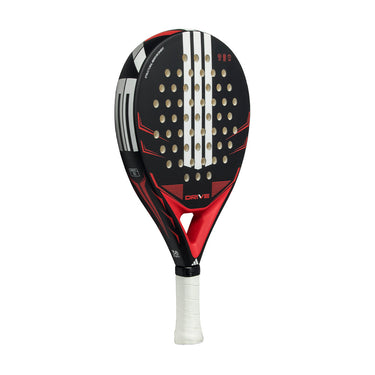
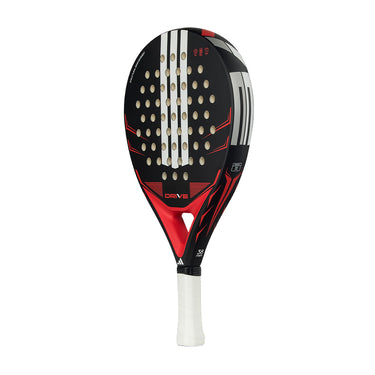
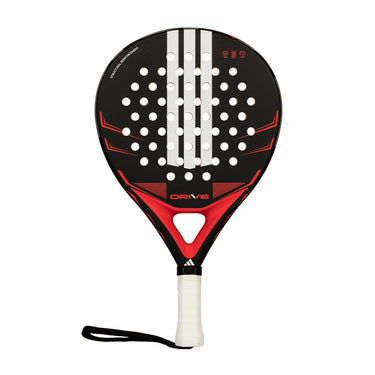
| Adidas Drive Black 2026 | Round | — | 360–375 g | Soft | Complete beginner | Control and simplicity |
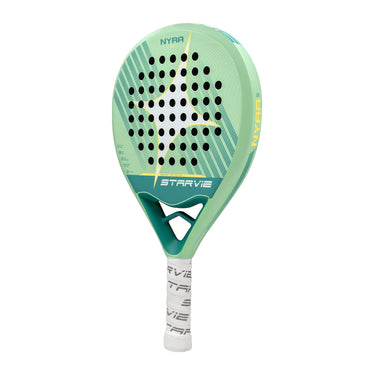
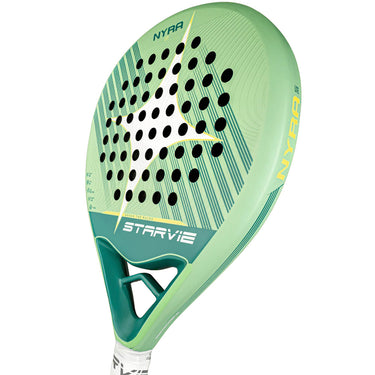
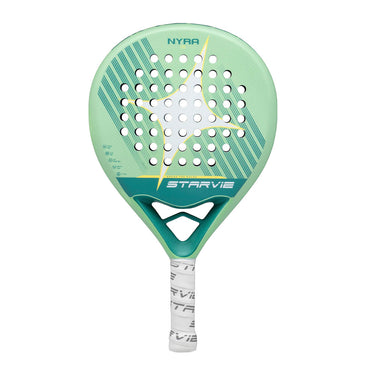
| StarVie Nyra 2026 | Round | Low | 340–355 g | Soft | Beginner who wants a light racket | Comfort and easy handling |
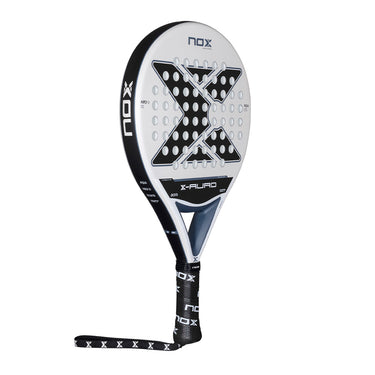
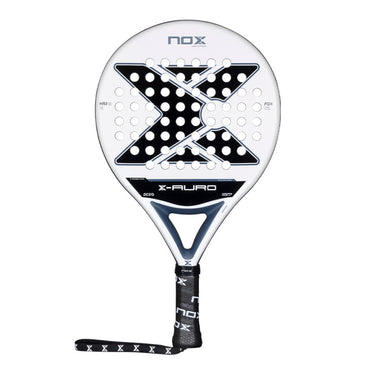
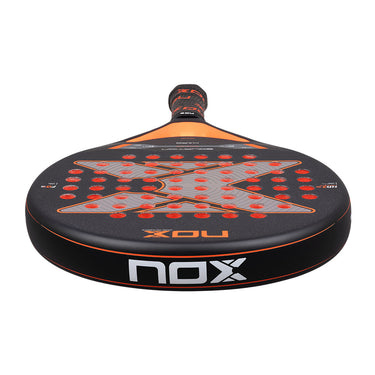
| NOX X-Auro 2026 | Round | Low | 360–375 g | Medium | Beginner with room to grow | Wide sweet spot and stability |
| Adidas RX Series 2026 | Round | — | 360–375 g | Soft | Improving beginner | Comfort and forgiveness |
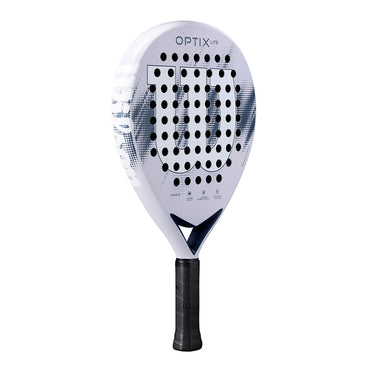
| Wilson Optix V2 Lite Lilac 2026 | Round | Low | 355 g | Soft | Occasional beginner | Lightness |
| Head Evo Extreme 2026 | Teardrop | — | 350 g | Soft | Beginner with some experience | Ball output and versatility |
| NOX Equation Hard Advanced 2026 | Round | Medium | 355–365 g | Medium-hard | Intermediate, for fast improvers | Step towards intermediate |
| Bullpadel Discover Control 2025 | Round | — | 360–370 g | Soft | Complete beginner | Ease of use and value |
The Best Beginner Padel Rackets 2026 — In Detail
Adidas Drive Black 2026

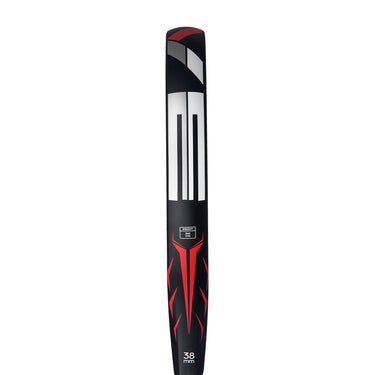
The Adidas Drive Black 2026 is one of the most logical starter padel rackets for anyone new to the game. It combines a round shape, a centred sweet spot, fibreglass faces and an EVA Soft Performance core that absorbs vibration, all designed to make learning easier from the very first rally.
If your main question is "what padel racket should I buy as a complete beginner?", this is one of the clearest answers: simple, controllable and easy to get on with.
| Shape | Round |
| Weight | 360–375 g |
| Faces / core | Fibreglass / EVA Soft Performance |
| Level | Complete beginner |
Ideal for: beginners who want a reliable, comfortable and easy first padel racket.
StarVie Nyra 2026

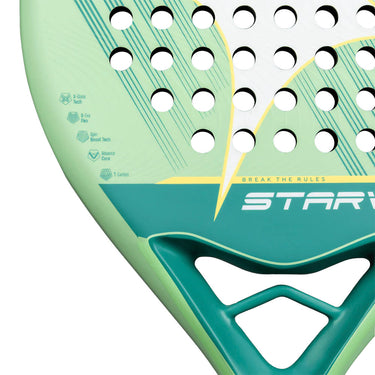
The StarVie Nyra 2026 stands out for comfort and lightness. It has a round shape, a low balance, X-Glass fibreglass faces and a soft S-Eva Flex core, a combination that makes control easier and reduces strain on the arm.
It is one of the best lightweight padel rackets for beginners, and it suits lighter players, women starting out and anyone who needs a racket that is genuinely easy to swing from the very first session.
| Shape | Round |
| Balance | Low |
| Weight | 340–355 g |
| Faces / core | X-Glass fibreglass / S-Eva Flex |
| Level | Beginner |
Ideal for: players who prioritise lightness, comfort and easy handling.
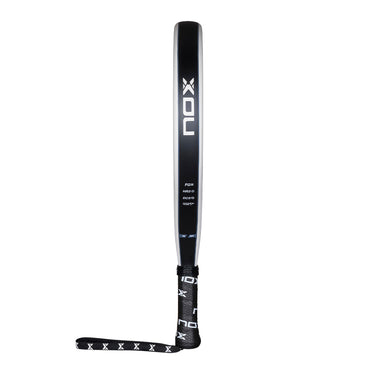
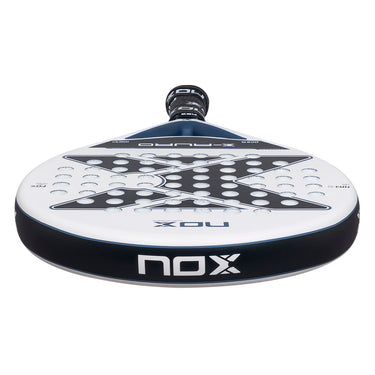
NOX X-Auro 2026

The NOX X-Auro 2026 is one of the most complete control rackets for beginners. Its round shape and low balance make it very forgiving, while the fibreglass faces and HR3 EVA core give a comfortable feel and a reassuring sense of stability.
It is not just comfortable: it has enough structure that you will not outgrow it after a few months, which is why it suits both complete beginners and amateur players moving up a level.
| Shape | Round |
| Balance | Low |
| Weight | 360–375 g |
| Faces / core | Fibreglass / HR3 EVA |
| Level | Beginner to intermediate |
Ideal for: players who want a beginner control racket with a bit more substance.
Adidas RX Series 2026

The Adidas RX Series 2026 is a round control racket with fibreglass faces and an EVA Soft Performance core. It is designed mainly for intermediate players, but its soft feel and forgiveness make it a strong choice for beginners who are already making clean contact and want a racket to grow with.
It forgives mistakes and stays comfortable through long training sessions, two qualities that help you improve faster.
| Shape | Round |
| Weight | 360–375 g |
| Faces / core | Fibreglass / EVA Soft Performance |
| Level | Beginner progressing towards intermediate |
Ideal for: beginners who want to learn comfortably and keep using the same racket as they improve.
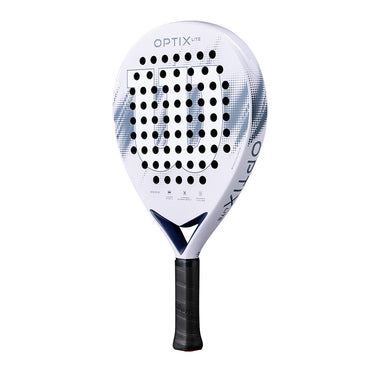
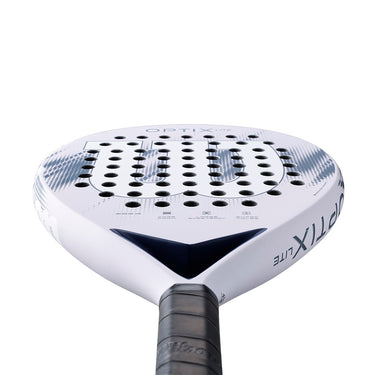
Wilson Optix V2 Lite Lilac 2026

The Wilson Optix V2 Lite Lilac 2026 is one of the lightest and most comfortable rackets in this selection. It has a round shape, a low balance, a weight of around 355 grams, woven fibreglass faces and a low-density foam core that softens every hit.
It is designed for women taking up padel, casual players and anyone with limited arm strength or prone to arm fatigue. For more options in this profile, see our guide to the best padel rackets for women.
| Shape | Round |
| Balance | Low |
| Weight | 355 g |
| Faces / core | Woven fibreglass / Core Foam |
| Level | Beginner and casual play |
Ideal for: players who want maximum lightness and a very comfortable feel.
Head Evo Extreme 2026

The Head Evo Extreme 2026 is a beginner racket with a teardrop shape. Its fibreglass faces and soft core give a gentle feel and a large sweet spot, with a little more ball output than a pure round racket.
It suits players who have already had a few sessions and want a versatile racket without moving to anything demanding. Availability of this model may vary by market.
| Shape | Teardrop |
| Weight | 350 g |
| Faces / core | Fibreglass / soft core |
| Level | Beginner with some experience |
Ideal for: players who have found their feet and want a versatile, comfortable racket.
NOX Equation Hard Advanced 2026

The NOX Equation Hard Advanced 2026 sits right on the border between beginner and intermediate. It has a round shape, a medium balance, fibreglass faces and a high-density HR3 Hard EVA core that gives a firmer feel and more power.
It is not the right choice for someone who has never held a padel racket, but it is a strong option for quick learners who want to buy with the next few months in mind.
| Shape | Round |
| Balance | Medium |
| Weight | 355–365 g |
| Faces / core | Fibreglass / HR3 Hard EVA |
| Level | Intermediate, for fast improvers |
Ideal for: players close to intermediate level who want more range without losing control.
Bullpadel Discover Control 2025

Although it is a 2025 model, the Bullpadel Discover Control 2025 remains one of the most sensible beginner rackets for ease of use and value for money. That is why it stays in this guide: not as the headline pick, but as a smart buy for anyone starting from zero who puts control ahead of novelty.
Its formula is simple and exactly what a new player needs: a round shape, a SoftEva core with a soft feel and a response that is easy to understand from the first hit.
| Shape | Round |
| Weight | 360–370 g |
| Faces / core | Fibreglass / SoftEva |
| Frame | CarbonTube |
| Level | Complete beginner |
Ideal for: beginners who want a reliable, sensibly priced first racket, even if it is not a 2026 release.
How to Choose Your First Padel Racket
Choosing a beginner padel racket is much easier when you treat it as a practical decision rather than a brand or design choice. Think about how often you play, the feel you want and whether you prefer something very simple or a racket with more range.
| Your situation | Recommended option |
|---|---|
| Complete beginner who wants maximum ease | Adidas Drive Black 2026 |
| You want a light, very comfortable racket | StarVie Nyra 2026 or Wilson Optix V2 Lite Lilac 2026 |
| You want a more complete control racket | NOX X-Auro 2026 |
| A few months in and you want more range | Adidas RX Series 2026 or Head Evo Extreme 2026 |
| You want to step up towards intermediate | NOX Equation Hard Advanced 2026 |
| You want a sensibly priced first racket | Bullpadel Discover Control 2025 |
How Much Should a Beginner Spend?
You do not need an expensive racket to learn well. High-end rackets mostly charge for stiffness and power technologies, which is exactly what a beginner cannot use yet. At the other extreme, the very cheapest rackets are often heavy or uncomfortable and hold your progress back.
The sensible choice is a beginner or mid-range racket from a reputable brand, with a soft feel and a round shape. Buying last season's model is another smart way to save, as padel racket technology changes slowly from one year to the next. You can compare every option in our beginner padel rackets collection.
Coming from Tennis? How a Padel Racket Is Different
If you play tennis, it is worth knowing how different a padel racket is. There are no strings: instead you get a solid, perforated face with a foam core, a shorter frame and a safety cord on the handle. Padel is also played on a smaller, enclosed court, with an underarm serve and the walls as part of the game.
That means technique, not power, decides most points when you start, and a control-focused racket suits the game far better than a heavy, stiff frame. Your racket-sport background will help your timing, but resist the urge to buy the most powerful racket on day one. If you are already striking the ball cleanly, a soft teardrop racket can be a good place to start.
Common Mistakes Beginners Make When Buying a Padel Racket
The most common mistake is buying a diamond-shaped racket too early. Diamond shapes carry more weight in the head, demand better technique and make control harder while your strokes are still developing.
The second is choosing a feel that is too stiff. A rigid racket may look more "pro", but for a beginner it is less forgiving, gives harsher feedback and slows down learning. For the same reason, avoid buying your favourite professional's racket: it is designed for a completely different level.
The third is ignoring weight. If you are not particularly strong, already feel arm strain or play occasionally, avoid heavy rackets. You do not need the lightest racket on the market, just one that lets you play comfortably and finish the match without strain.
Finally, do not get caught up in stiff carbon or advanced technologies. For a beginner, a forgiving and comfortable racket will help you improve faster than any competition-level spec.
FAQs: Best Padel Rackets for Beginners 2026
What is the best padel racket for beginners in 2026?
It depends on your profile. For a complete beginner, the Adidas Drive Black 2026 is one of the most straightforward choices. If you want more room to grow, the NOX X-Auro 2026 or the Adidas RX Series 2026 may suit you better.
What padel racket should I buy as a beginner?
Look for a round racket with a low to medium balance, a manageable weight and a soft or medium-soft feel. That setup gives you the best combination of control, comfort and easy swing mechanics.
What is the best budget beginner padel racket?
The Bullpadel Discover Control 2025 remains a very strong option if you are focused on ease of use and value for money, even though it is not a 2026 release.
What is the best padel racket for beginner to intermediate players?
If you are already past your first few sessions, the NOX X-Auro 2026 and the Adidas RX Series 2026 combine beginner-friendly control with enough structure to keep up as you improve. If you are progressing quickly, the NOX Equation Hard Advanced 2026 is the natural bridge towards intermediate level.
What shape of padel racket should a beginner use?
In most cases, a round racket. It offers the largest sweet spot, the most forgiving response and the easiest learning curve.
Which beginner padel racket is lightest and easiest to swing?
If lightness and comfort are your priorities, the StarVie Nyra 2026 and the Wilson Optix V2 Lite Lilac 2026 are two of the most interesting options in this guide.
How heavy should a beginner padel racket be?
Most adult padel rackets weigh between 340 and 375 grams. For a beginner, a manageable racket with a low or medium balance works best; if you are unsure between two weights, choose the lighter one.
When should a beginner upgrade their first padel racket?
There is no fixed timetable, but a few signs tell you it is time: the ball comes back too slowly on your smashes, you are placing shots deliberately and want more bite, or you play several times a week and compete in club leagues or tournaments. At that point it makes sense to move to a teardrop or hybrid racket with a firmer core and more carbon.
Until then, there is no rush: upgrading too early usually hurts your game more than it helps. A good beginner racket has plenty to give while you build your technique.
Final Recommendation
The best padel rackets for beginners in 2026 are the ones that help you play with more control, more comfort and more confidence. At this stage, progress matters far more than power.
For a complete beginner, the Adidas Drive Black 2026 is one of the safest bets. For something lighter, the StarVie Nyra 2026 and the Wilson Optix V2 Lite Lilac 2026 both deliver. For a more complete control racket, the NOX X-Auro 2026 is hard to beat. And if you are thinking a few months ahead, the Adidas RX Series 2026 or the NOX Equation Hard Advanced 2026 offer more room to grow.
Choose according to your level, your build and how often you play, and you will get it right from the start. When you are ready, compare every model in our beginner padel rackets collection or browse the full range of padel rackets.
Products in this article