Direkt zum Inhalt
0

What Is Padel? A Complete Beginner's Guide to the Sport

Padel is the fastest-growing racquet sport in the world, and Britain has caught the bug. If you have walked past a glass-walled court at your local club and wondered what...

Padel is the fastest-growing racquet sport in the world, and Britain has caught the bug. If you have walked past a glass-walled court at your local club and wondered what the fuss is about, this guide answers the question what is padel in full, from how the game is played to why it is so addictive.

What is padel?

Padel is a racquet sport that combines elements of tennis and squash. It is played in doubles on an enclosed court that is slightly smaller than a tennis court, with glass side walls and a back wall that are part of the game. Players use solid rackets and a ball very similar to a tennis ball.

The rules borrow the scoring system from tennis, but the walls, the underarm serve and the smaller playing field make padel a distinct, fast-paced and highly social sport that is famously easy to pick up.

Where did padel come from?

Padel was invented in 1969 by Enrique Corcuera in Acapulco, Mexico. It quickly spread to Spain and Argentina in the 1970s, and Spain remains the heartland of the game, home to most of the world's professional players.

From those roots, padel has grown into one of the fastest growing sports on the planet, with millions of new players picking up a racket every year. Its blend of accessibility and excitement has driven that spread from Spain and Argentina to the rest of Europe, the Middle East and now the United Kingdom.

Padel vs paddle: clearing up the confusion

Many people in the UK type "paddle" when they mean padel. The sport is spelled padel, without the double d, and it is not the same as paddle tennis or platform tennis, which are separate American games. If you have heard of "padel tennis", that is simply another name for padel.

So whenever you see paddle, padel or padel tennis being used around courts and clubs in Britain, they almost always refer to the same great sport.

The padel court

A padel court measures 20 metres by 10 metres, making it noticeably smaller than a tennis court. It is enclosed by glass side walls and a back wall, topped with a metallic mesh or wire fence, and divided by a net. All the court lines are 5 centimetres wide.

The surface is usually artificial turf, and each half of the court has a service line and a service box. The net sits low across the middle, and behind it the enclosed playing field lets the ball rebound off the walls, so rallies last far longer than you might expect.

Padel equipment: rackets and balls

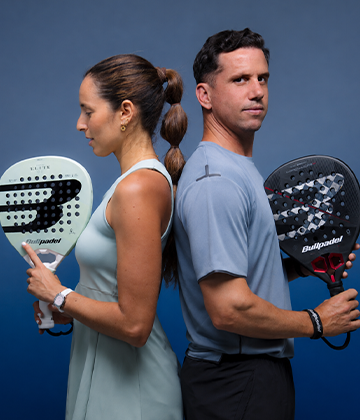
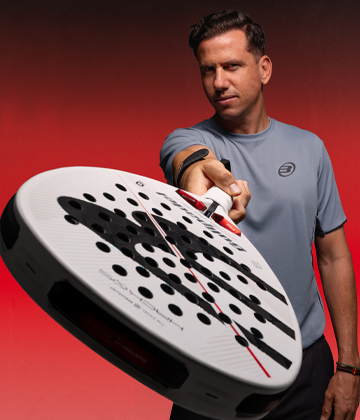
A padel racket is solid and stringless, with holes through the face, and a racket must not exceed 45.5 cm in length. Modern rackets are built from carbon fibre and EVA foam, balancing power and control, and they come in round, teardrop and diamond shapes to suit different playing styles. If you are just starting out, a forgiving all-round option like the Adidas RX Series Light is easy to swing, while more confident players often step up to a punchier pala such as the Nox Nextgen Pro Hybrid 3K. You can browse a full range of padel rackets to find one that suits your level.

Padel balls look like standard tennis balls but have slightly less pressure, which keeps them under control inside the enclosed court. A padel ball measures between 6.32 and 6.77 cm across and weighs 56 to 59 grams. A tube of padel balls and a comfortable pair of court shoes are all you need to get started.

How is padel played?

Padel is played in doubles, with two players on each side of the court. The server must serve underarm, striking the ball at or below waist level with at least one foot on the ground, and the serve must land in the opponent's service box. As in tennis, if the first serve misses, the server is allowed a second serve.

After the ball bounces on the ground, the ball hits the glass walls and rebounds, so it can still be returned, which is where the squash-like element of wall play comes in. The ball is only allowed to bounce on the ground once before it must be returned.

The padel scoring system

Padel uses the same scoring system as tennis. Points run 15, 30, 40 and game, and the first team to six games wins a set, provided they lead by two. If the score reaches deuce, many competitions use a golden point to decide the game quickly.

Matches are usually the best of three sets, and if a set reaches six games each, a tie break settles it. Because the scoring will feel familiar to anyone who has watched tennis, most newcomers pick it up within a game or two. Players also switch sides of the court after every odd game.

Padel vs tennis: the key differences

Padel and traditional tennis share a scoring system, but they play very differently. Padel uses solid rackets rather than strung ones, the serve is underarm, the court is enclosed, and the walls are in play. It is always doubles, which makes it more sociable than singles tennis.

Many tennis players find the smaller court and forgiving wall play make padel easier to learn, which is one reason so many are switching across from tennis and squash.

Padel vs squash

Padel borrows the idea of playing off the walls from squash, but there are clear differences. In padel you hit over a net into your opponent's court, the ball must clear the net, and it is played outdoors or in open halls rather than in a sealed box.

Why is padel so popular?

Padel is one of the most social sports around, and one of the most exciting racket sports too. It is fun, fast paced and easy to learn, so complete beginners can enjoy a proper rally within minutes. The doubles format means four friends can play together, which makes it a great sport for padel players of all ages and abilities.

The enclosed court also keeps the ball in play, so points are longer and more exciting than many newcomers expect. Add in the social side of doubles and the low barrier to entry, and it is easy to see why padel has become one of the most talked-about sports in Britain.

Is padel heading to the Olympics?

Padel's explosive growth has fuelled genuine hopes of Olympic recognition. The International Padel Federation continues to expand the sport across new countries, and with the professional game booming, many in the padel world believe a future Olympic appearance is a realistic ambition rather than a fantasy.

Padel in the UK

In Britain, padel is governed by the Lawn Tennis Association, the same national governing body that runs tennis. Chains such as David Lloyd Clubs have built hundreds of courts, and many clubs now offer coaching and social sessions for new players.

The result is a boom: padel is spreading from London across the whole country, with new courts opening every month.

Who runs padel around the world?

Globally, the sport is overseen by the International Padel Federation, known as the FIP. The professional game is showcased on tours such as Premier Padel and the World Padel Tour, where the best professional players compete in events with quarter finals, semi-finals and finals watched by millions.

Is padel easy to learn?

Yes. Padel is widely considered easier to learn than tennis because the court is smaller, the serve is simple, and the walls give you a second chance to reach the ball. Beginners can rally and enjoy the game almost straight away, then develop tactics over time.

What equipment do you need to start?

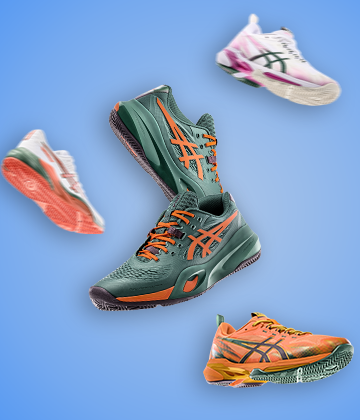
To play padel you need a padel racket, a few padel balls and suitable footwear. Padel-specific shoes or trainers give you grip on the artificial turf, while tennis shoes can work well when you first start. That is genuinely all it takes to step on court.

Common questions about padel

Is padel the same as padel tennis? Yes, they are two names for the same sport. Is padel the same as paddle? No, paddle usually refers to paddle tennis, a different game, although many people use the word by mistake. Can you play padel as singles? It is possible, but padel is almost always played in doubles.

The health benefits of padel

Padel is a genuinely good workout dressed up as a game. A typical match involves constant short sprints, changes of direction and plenty of upper-body work, so it builds cardiovascular fitness, agility and coordination without ever feeling like exercise.

Because it is played in doubles and the walls keep long rallies going, padel is lower impact than singles tennis and kinder on the joints. That makes it a great sport for all ages, from teenagers to players well into their sixties and beyond.

How to get started with padel

Getting started is refreshingly simple. Find a local padel club or a leisure centre with courts, then book a court online and grab three friends, since padel is played in doubles. Many clubs run beginner sessions and coaching, which are the quickest way to learn the basics.

If you do not have a full group, plenty of clubs organise social sessions and mix-ins that pair you with other players of a similar standard, so you never have to turn up alone.

Basic padel tactics for beginners

Once you understand what padel is, a few simple tactics go a long way. Keep the ball in play and be patient, because forcing winners early is the most common beginner mistake. Use the walls to your advantage: let the ball rebound and take it on the second chance rather than rushing.

Positioning matters too. Try to move up to the net with your partner when you are on the attack, and drop back together to defend. Good communication with your partner is often worth more than raw power.

What to wear for padel

There is no strict dress code. Comfortable sportswear and padel-specific shoes or trainers with good grip on artificial turf are ideal. As the sport is fast paced with lots of lateral movement, supportive footwear is the one piece of kit worth getting right from the start.

Padel's rise in the UK

Padel is booming in Britain. Court numbers grew from under 40 in 2016 to more than 700 by 2024, and player numbers jumped from 129,000 in 2023 to over 400,000 in 2024, with around one million expected in 2026. Globally the sport now passes 58 million players across more than 100 FIP federations.

Final thoughts

So, what is padel? It is a fun, social and fast-paced racquet sport that blends tennis and squash on an enclosed court, and it is perfect for players of every level. If this guide has tempted you onto court, pick up a padel racket and give it a go.

Frequently asked questions

What is padel? Padel is a racquet sport that combines elements of tennis and squash. It is played in doubles on an enclosed court that is slightly smaller than a tennis court, with glass side walls and a back wall that are part of the game. Players use solid rackets and a ball very similar to a tennis ball.

Is padel the same as paddle? No. The sport is spelled padel, without the double d, and it is not the same as paddle tennis or platform tennis, which are separate American games. Many people use the word paddle by mistake.

Is padel easy to learn? Yes. Padel is widely considered easier to learn than tennis because the court is smaller, the serve is simple, and the walls give you a second chance to reach the ball. Beginners can rally and enjoy the game almost straight away.

What equipment do you need to start padel? To play padel you need a padel racket, a few padel balls and suitable footwear. Padel-specific shoes or trainers give you grip on the artificial turf, while tennis shoes can work well when you first start.


Related guides

Hinterlasse einen Kommentar

Deine Email-Adresse wird nicht veröffentlicht..

Warenkorb

Dein Warenkorb ist leer

Beginn mit dem Einkauf

Optionen wählen